Light & Optics
Follow light. Build an image. Explain how we see.
Class Notes
Classroom investigation guide
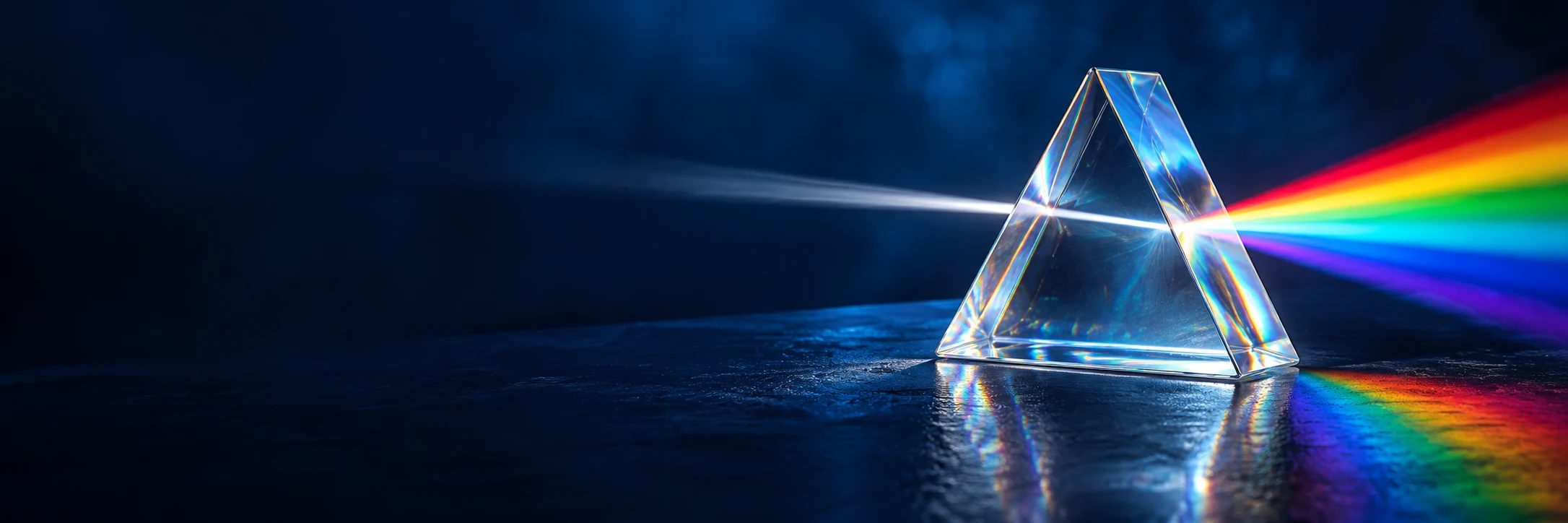
Virtual Science Lab
Open investigation How does light bend in water?
Aim a light ray at water. Measure its direction before and after the surface, then use your evidence to explain refraction.
Fair testing · SimulationLight & Optics lessons
Follow light from a source to an image, then into an eye. Each lesson brings together explanations, notes, a working model, worked reasoning and practice.
Light & evidence
Mirrors, refraction & lenses
03Plane mirrors & the law of reflectionMeasure angles from the normal and distinguish a virtual image from a point where real rays meet.04Concave & convex mirrorsPredict qualitative image properties for concave and convex mirrors using focal-point reasoning.05Refraction & apparent positionPredict bending relative to the normal and explain apparent displacement without moving the object.06Lenses & image formationRelate focal length and object position to real/virtual, upright/inverted and enlarged/reduced images.
Devices & vision
07Optical devicesCompare microscopes, telescopes, binoculars and cameras using their light paths.08The human eyeConnect each major eye structure to its function and explain accommodation and the blind spot.09Animal eyes & adaptationsRelate eye structures to environmental demands and identify trade-offs in visual systems.10Extending & correcting visionDistinguish simple myopia/hyperopia models and explain why a lens changes focus.11Investigating eye structuresRecord evidence about eye structures and distinguish an observation from a functional inference.
Extend the idea · colour, waves & energy
12Colour & the visible spectrumRelate visible colour to light reaching the eye and distinguish additive light mixing from selective absorption.13Waves, photons & model limitsDescribe wavelength, frequency and amplitude and compare ray, wave and photon models.14Light sources & lighting energyDistinguish common light-production processes and calculate electrical energy from power and time.
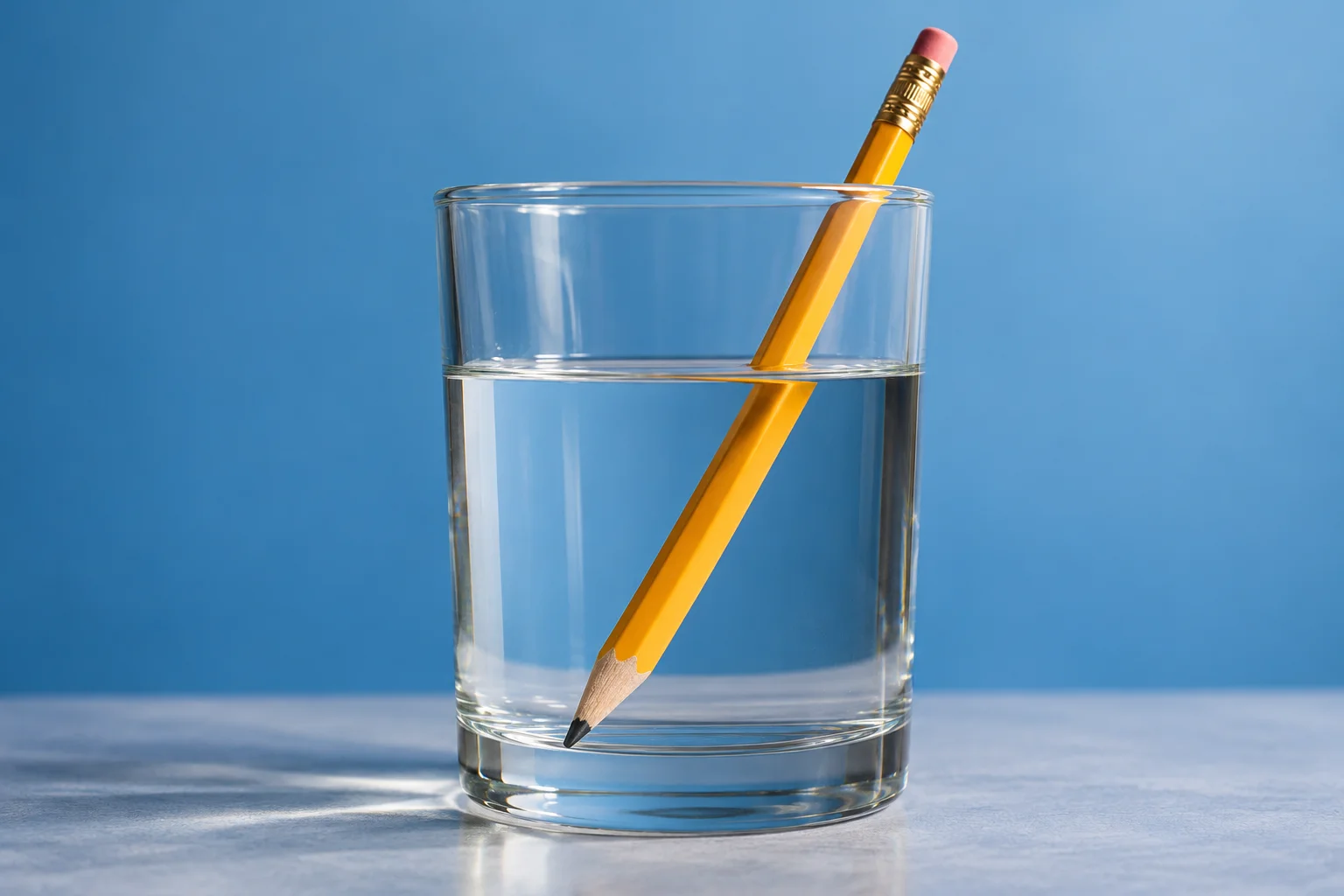
AN EVERYDAY PUZZLE
The pencil is straight. What changed?
Use a real observation, a ray diagram and an interactive model to explain the apparent bend.
Investigate refraction →Textbook & further reading
Make the light path visible
Full simulations and guided experiments are embedded in the matching lessons.

Explore vision, corrective lenses and the properties of glass.
 Physics GirlWhat does a mirror actually reverse?Watch & investigate →
 Physics GirlThe spoon-reflection puzzleWatch & investigate →
 Physics GirlGuide light with a stream of waterWatch & investigate →
 Physics GirlInside the world’s largest camera lensWatch & investigate →
 TED-EdWhy do cats have vertical pupils?Watch & investigate →
 Physics GirlWhat is colour?Watch & investigate →
All videos collected in your class notes (16)
Reflection Part 2: Convex & Concave Mirrors
Refraction
Lenses
Optical Devices
Human Eyes
Animal Eyes
NASA / STSCI · GO FURTHER
How do telescope data become a visible image?
Explore Webb’s image-making playlist. Identify how visible colours communicate information from wavelengths our eyes cannot detect.
Read NASA’s explanation →