GRADE 8 SCIENCE · FOLLOW THE LIGHT

Extending & correcting vision

Use optical models to explain blurred images and how lenses can change where light focuses.

Related class notes

Open PDF →

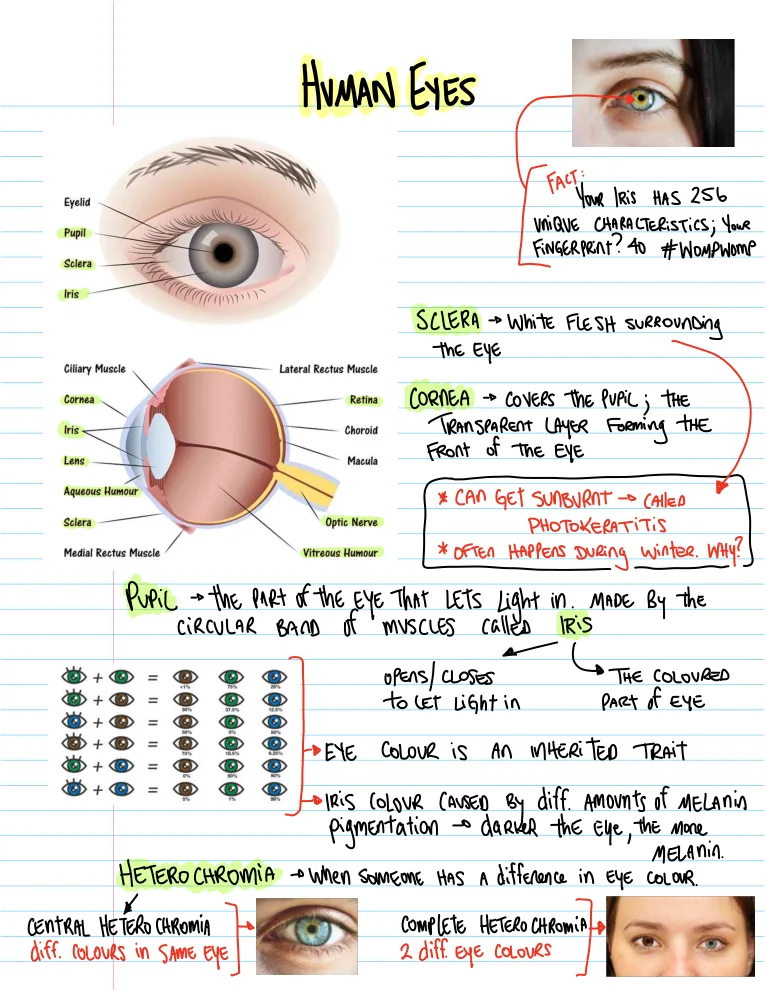
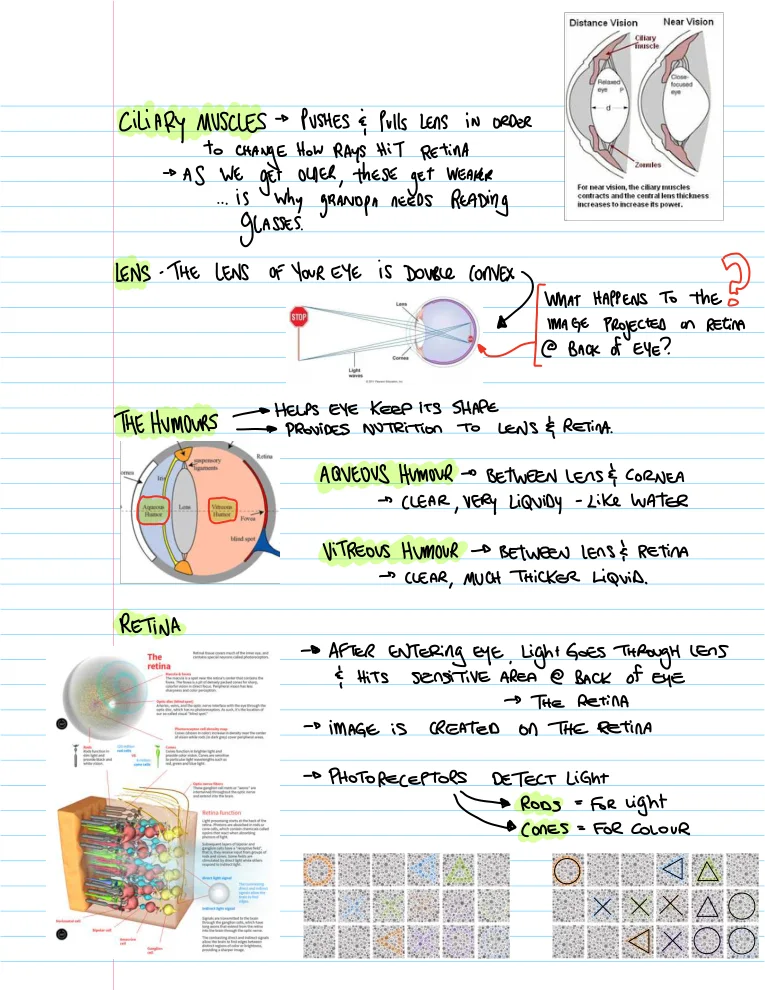
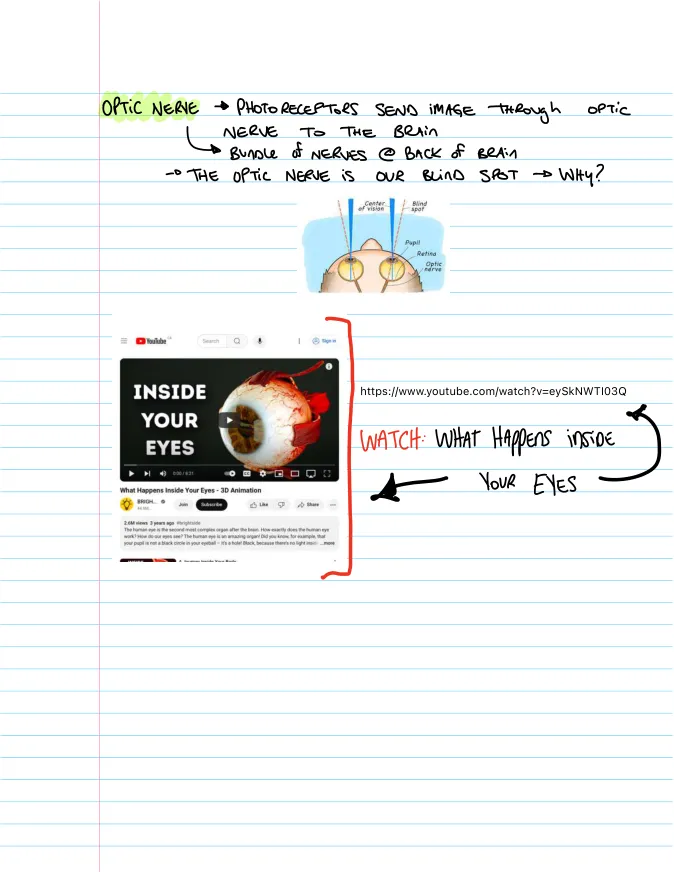
Use the human-eye notes as the starting point for this extension.

Locate the focus relative to the retina

In a simplified myopic eye with relaxed accommodation, parallel rays from distant objects focus in front of the retina. In a simplified hyperopic eye, they would focus behind it. Real eyes and prescriptions involve more than a one-line drawing.

Change the incoming rays

A diverging correction can reduce excessive convergence in the simple myopia model. A converging correction can add optical power in the simple hyperopia model. The goal is a sharp retinal image, not simply a bigger image.

Different causes need different explanations

Astigmatism involves unequal focusing in different directions. Presbyopia concerns reduced near accommodation with age, especially changes in lens flexibility. These are not all the same as an eyeball being too long or too short. A classroom model is not a way to diagnose a person.

Use evidence in a fictional case

Describe observations, propose an optical explanation, and show how a correction changes the model. State what information remains unknown. Glasses, contact lenses and clinical procedures act in different ways; treatment choices require qualified eye care. Do not use classmates’ health information as a public case study.

Words worth knowing
Myopia
Nearsightedness: distant objects can appear blurred.
Hyperopia
Farsightedness associated with insufficient focusing power relative to eye length.
Presbyopia
Age-related reduction in the ability to focus nearby objects.
Corrective lens
A lens chosen to alter the light entering an eye.
Learning goal

Distinguish simple myopia/hyperopia models and explain why a lens changes focus.

WATCH THE PHENOMENON

How glasses change the focus

TED-Ed · Animation

Compare near- and far-sighted models

Identify whether a lens adds convergence or divergence. Test the same change in the focus lab.

Open on YouTube →
PREDICT · CHANGE · EXPLAIN

Keep the image on the retina

Bring the object closer, adjust accommodation and compare a relaxed, short-sighted or long-sighted model eye.

Reduced, thin-lens eye: retina 17 mm behind the combined focusing surface; the two refractive-error models differ by ±4 D. Dioptres measure optical power. The sharpness preview is schematic.

FOLLOW THE REASONING

Work it through

A fictional eye focuses distant rays in front of the retina.

  1. Identify the simple model as myopia.
  2. A diverging lens spreads the incoming rays before they reach the eye.
  3. The eye then brings them to focus farther back, on the retina in the corrected model.

A fictional reader loses near focusing with age.

  1. Identify reduced accommodation rather than assuming poor effort.
  2. Lens stiffening can reduce the change in optical power available for near viewing.
  3. A suitable near correction can help; the actual prescription is a clinical decision.
TRY IT

Try it yourself

In the simple myopia model, distant light focuses in front of the retina. State diverging or converging for the usual correction and explain your reasoning.

Give me a hint

Reduce the convergence before light enters the eye.

Compare with a worked response

A diverging lens helps move the focus back toward the retina.

Does this model diagnose an individual person? State yes or no and explain your reasoning.

Give me a hint

A model leaves out clinical information.

Compare with a worked response

Vision assessment requires qualified eye care.

TAKE IT FURTHER

Make the connection

Why does a diverging lens help the simplified myopic eye?

Compare your reasoning

Diverging the incoming rays reduces the overall convergence of the system. That shifts a focus that was in front of the retina back toward the retina.

Common question: “The same glasses correct every blurry image.”

Different optical errors and viewing needs require different corrections. A generic model illustrates a mechanism, not an individual prescription.

CHECK YOUR UNDERSTANDING

Put the ideas to work

Commit to an answer, then use the feedback to check your reasoning.

1. Hyperopia in the simple model needs added…

2. Presbyopia is mainly associated with…

3. A good fictional case should…

What are you curious about?

Search lessons, class notes and interesting questions.