GRADE 8 SCIENCE · FOLLOW THE LIGHT

Investigating eye structures

Make observations first, then use a model to connect structures with their functions.

Class notes

Open PDF →

Exploratorium classroom guide. Specimen work follows your teacher’s procedures.

Begin with a labelled model

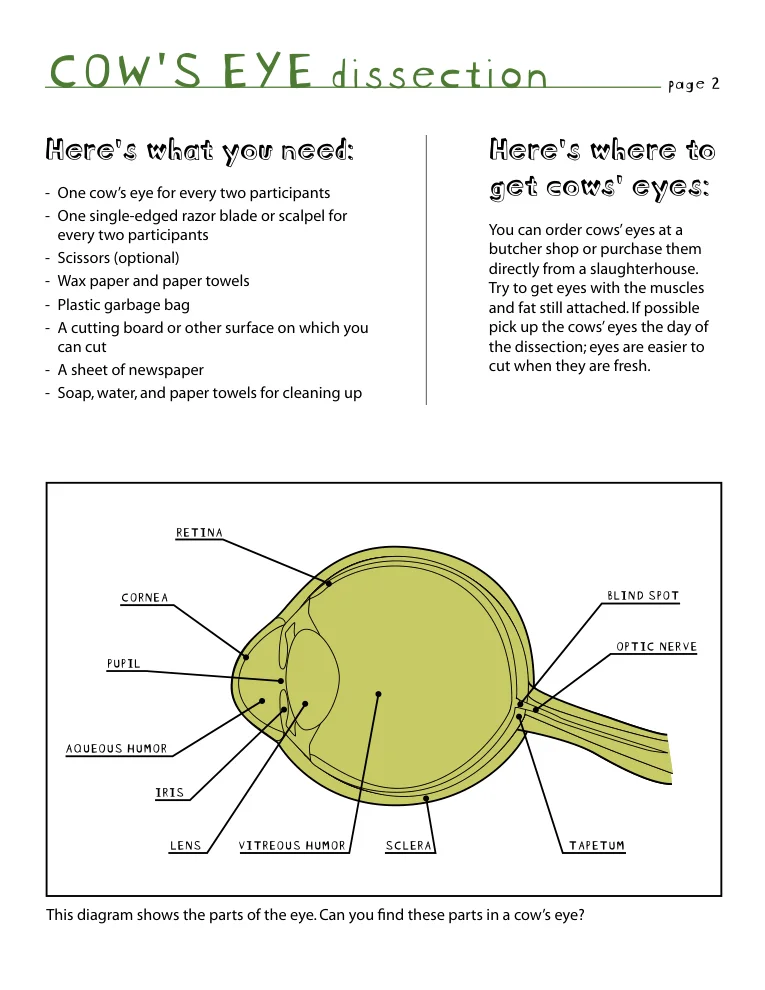
Locate cornea, iris, pupil, lens, retina, sclera and optic nerve in a diagram. Predict each structure’s position and role. A diagram is not proof that every specimen will look exactly like it: preservation, lighting and handling can change appearance.

Keep observations and explanations separate

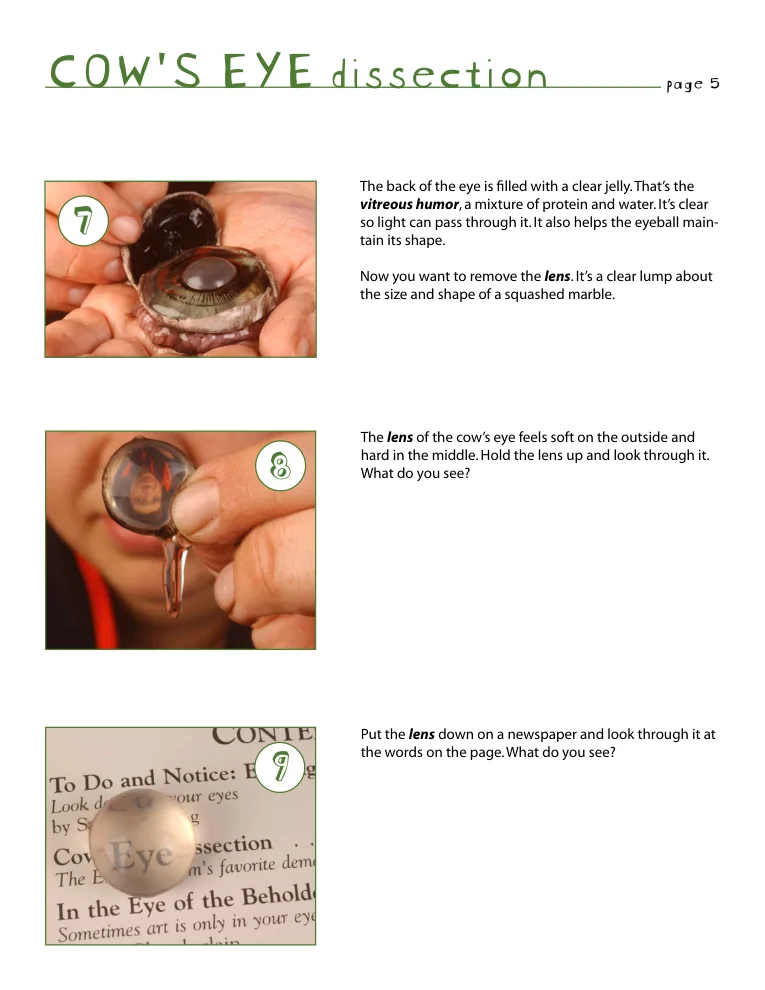
“The lens is transparent and curved” is an observation about appearance. “Its curvature helps refract light” is an inference supported by optics. Record the observation before adding the explanation, and identify uncertainty when a structure is damaged or hard to distinguish.

Compare structure with function

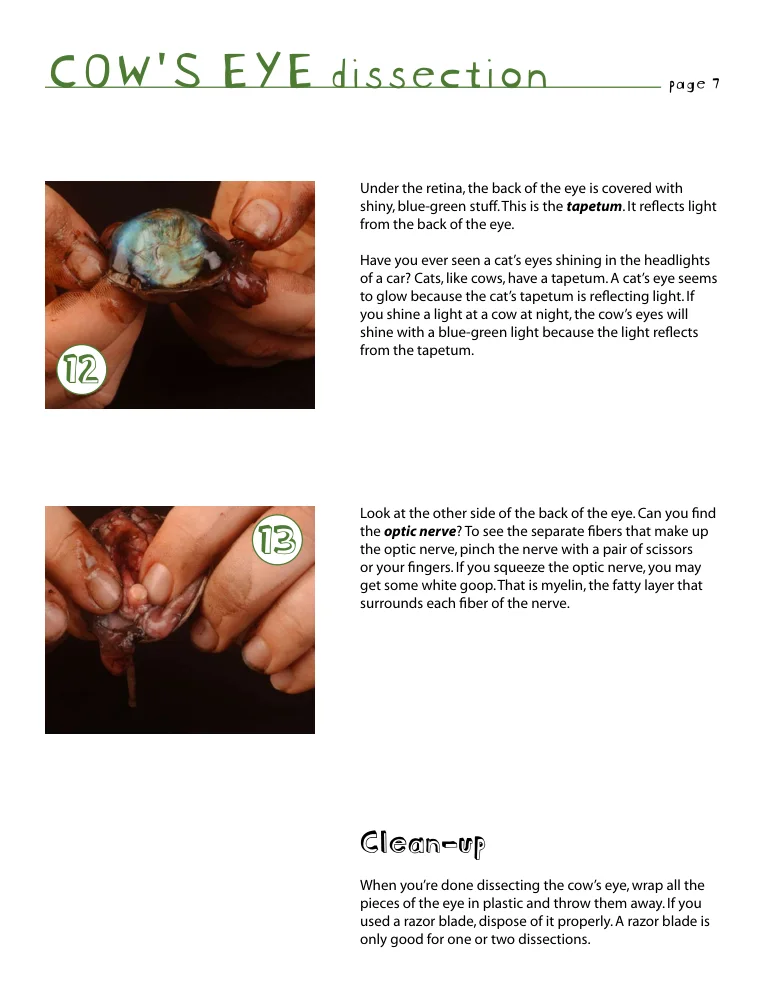
Transparency allows light transmission. Curvature and refractive-index differences contribute to focusing. A tough outer coat helps protect and maintain shape. The retina is involved in detection, while the optic nerve carries signals. A preserved specimen cannot demonstrate all living functions directly.

Use the classroom investigation appropriately

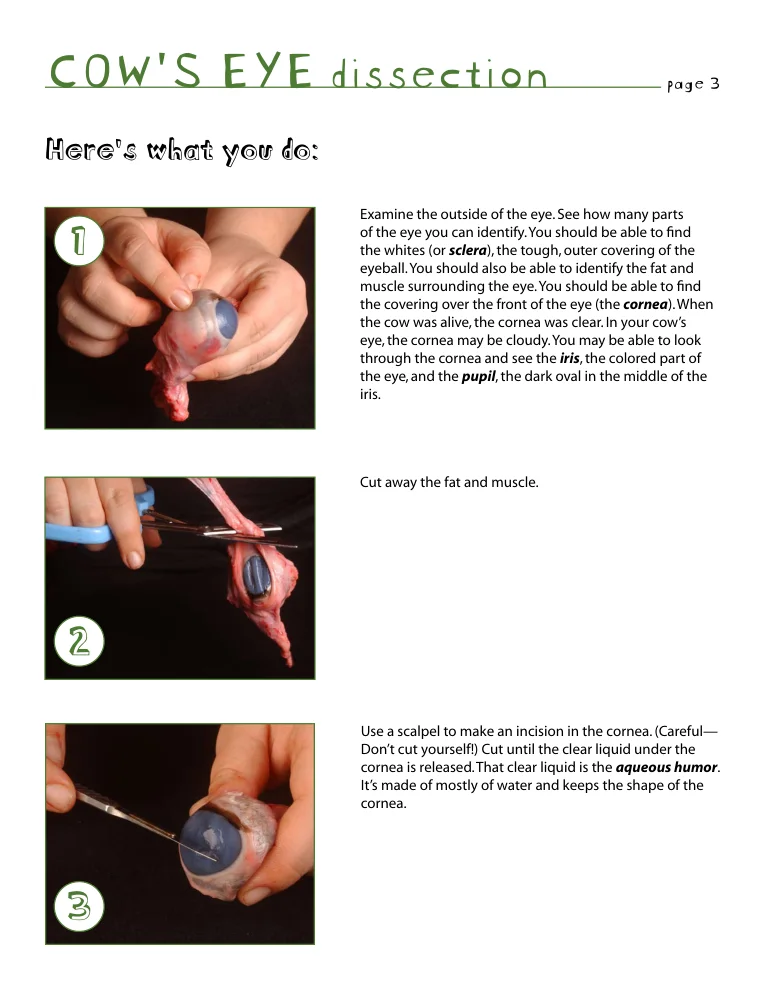
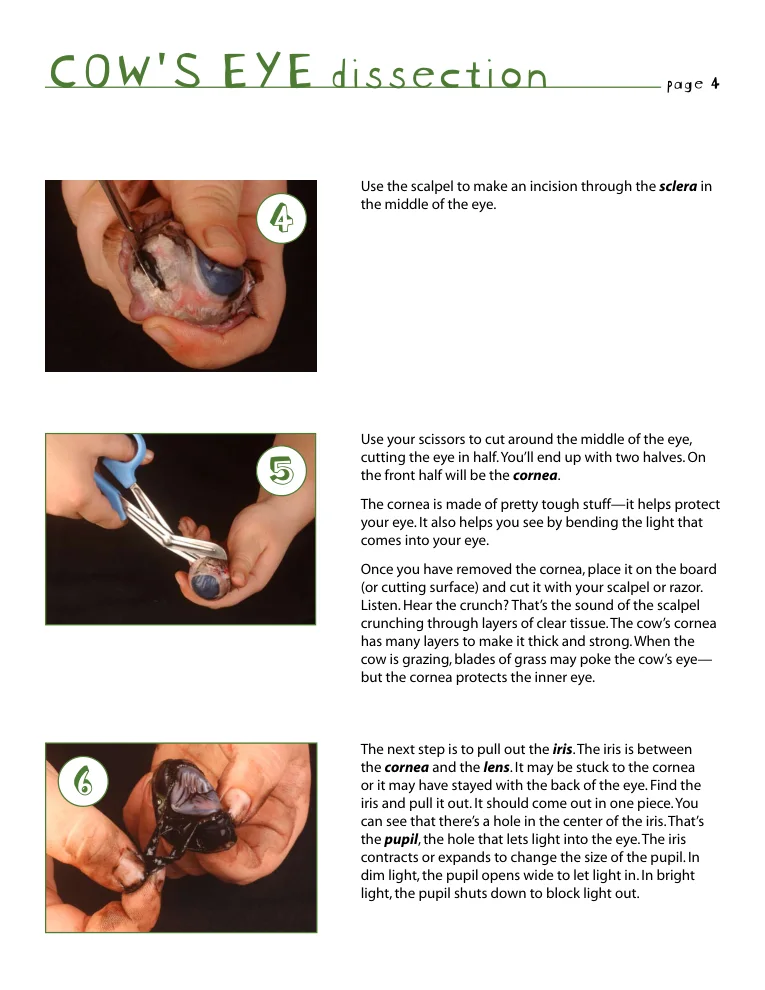
Any specimen dissection belongs in a teacher-supervised activity using school procedures and equipment. A diagram-based alternative can meet the structure/function reasoning goal. This page supports observations and explanations; it does not direct students to perform a dissection at home.

Words worth knowing
Observation
What is directly detected or measured.
Inference
An explanation drawn from observations and prior knowledge.
Limitation
A condition that restricts what evidence can show.
Learning goal

Record evidence about eye structures and distinguish an observation from a functional inference.

WATCH THE PHENOMENON

Connect the structures with their jobs

National Eye Institute, NIH · Anatomy animation

Observe first; infer second

Choose a structure from the guide. Record what can be observed about it, then distinguish that from an explanation of its function.

Open on YouTube →
PREDICT · CHANGE · EXPLAIN

Map a blind spot with your own vision

Close your left eye and keep your right eye fixed on the cross. Change viewing distance until the dot disappears. The software does not hide it.

A perception activity, not a simulated disappearance. Screens and viewing distances differ. The optic disc has no photoreceptors; the rest of the visual system can fill in surrounding patterns.

FOLLOW THE REASONING

Work it through

Write an evidence-based lens statement.

  1. Observation: the visible structure is clear and curved.
  2. Inference: a transparent curved structure can refract light and contribute to focusing.
  3. Limitation: appearance alone does not establish its exact focal length.

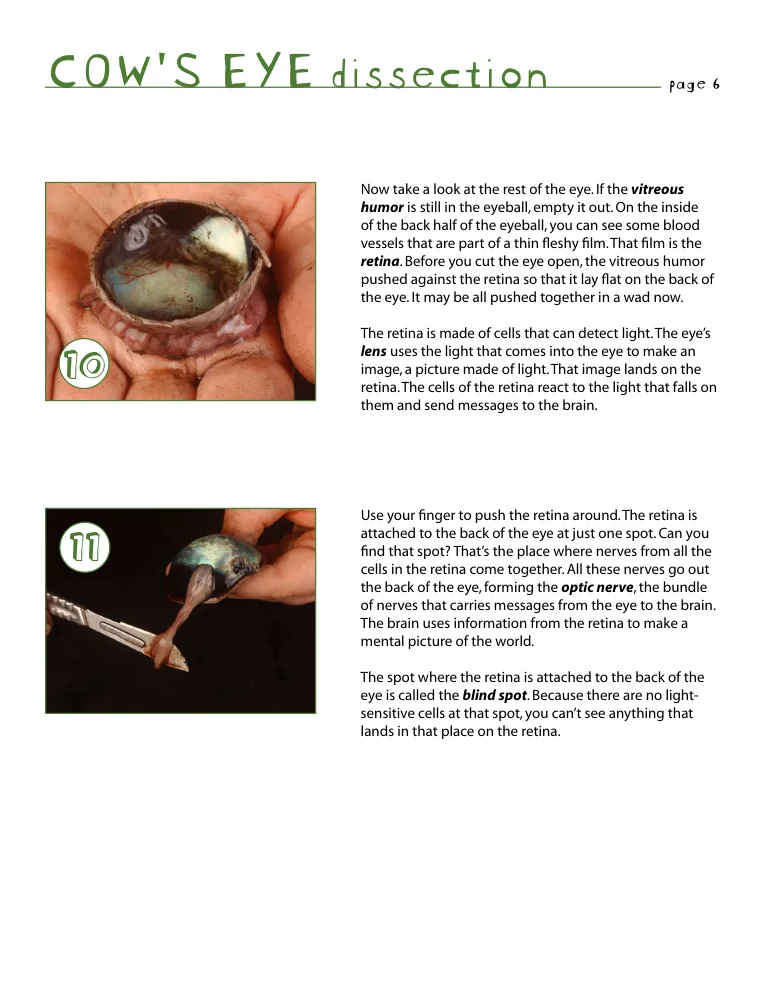
The retina is difficult to identify in a specimen.

  1. Record that the tissue is hard to distinguish rather than inventing a precise observation.
  2. Compare with the labelled model and teacher guidance.
  3. State which conclusion remains uncertain.
TRY IT

Try it yourself

“The structure looks transparent” is an observation or inference?

Give me a hint

It describes an appearance directly.

Compare with a worked response

It records what was seen.

“This structure helps focus light” is an observation or inference?

Give me a hint

It proposes a function from evidence.

Compare with a worked response

Function is inferred using optics and prior evidence.

TAKE IT FURTHER

Make the connection

Record one observation and one inference about a lens.

Compare your reasoning

Observation: it is curved and transmits some light. Inference: its shape and refractive-index boundaries help bend light. State whether the observation came from a model, a photo or a specimen.

Common question: “If a model labels it, I must claim I observed it.”

A model and a specimen are different sources of evidence. State what you actually observed and where you relied on a model.

CHECK YOUR UNDERSTANDING

Put the ideas to work

Commit to an answer, then use the feedback to check your reasoning.

1. Which is a direct observation?

2. A damaged specimen should lead to…

3. A diagram-based alternative can support…

What are you curious about?

Search lessons, class notes and interesting questions.