Name the structure
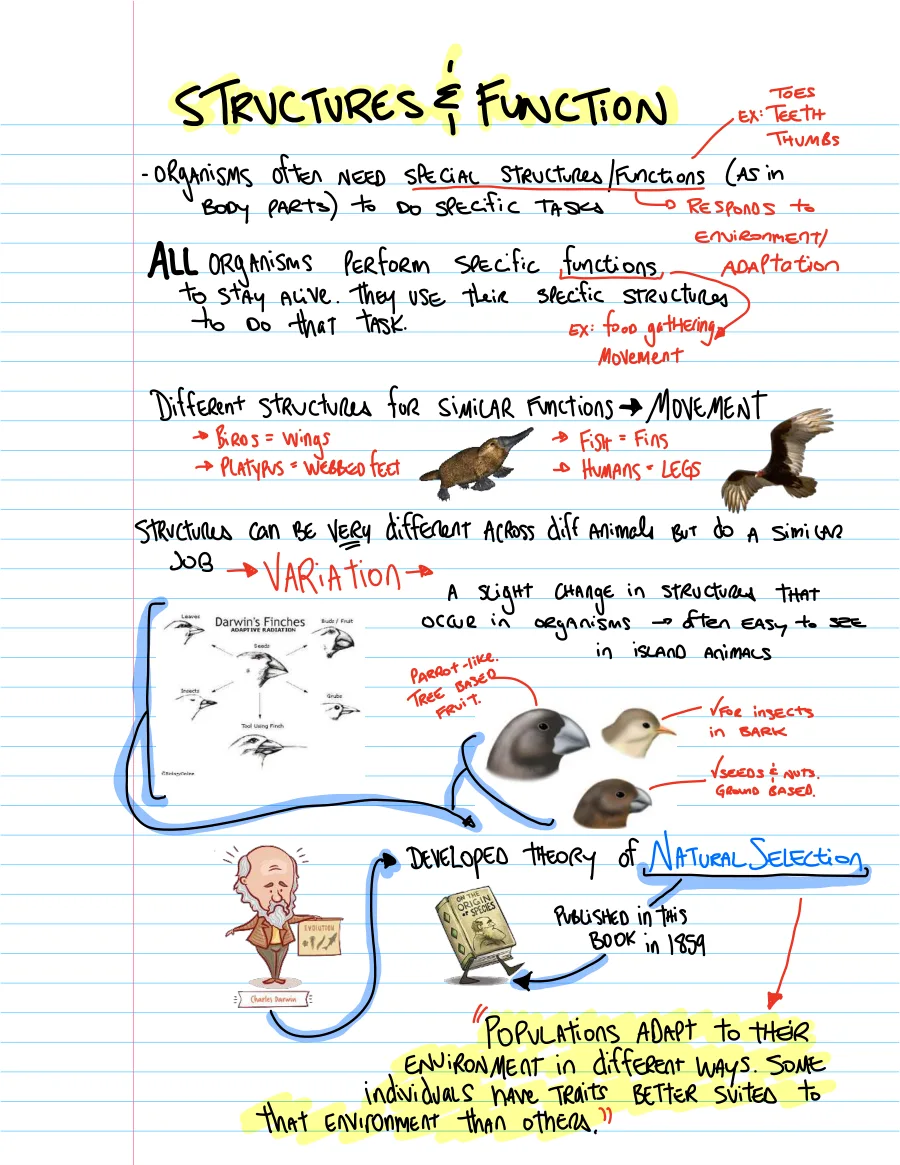
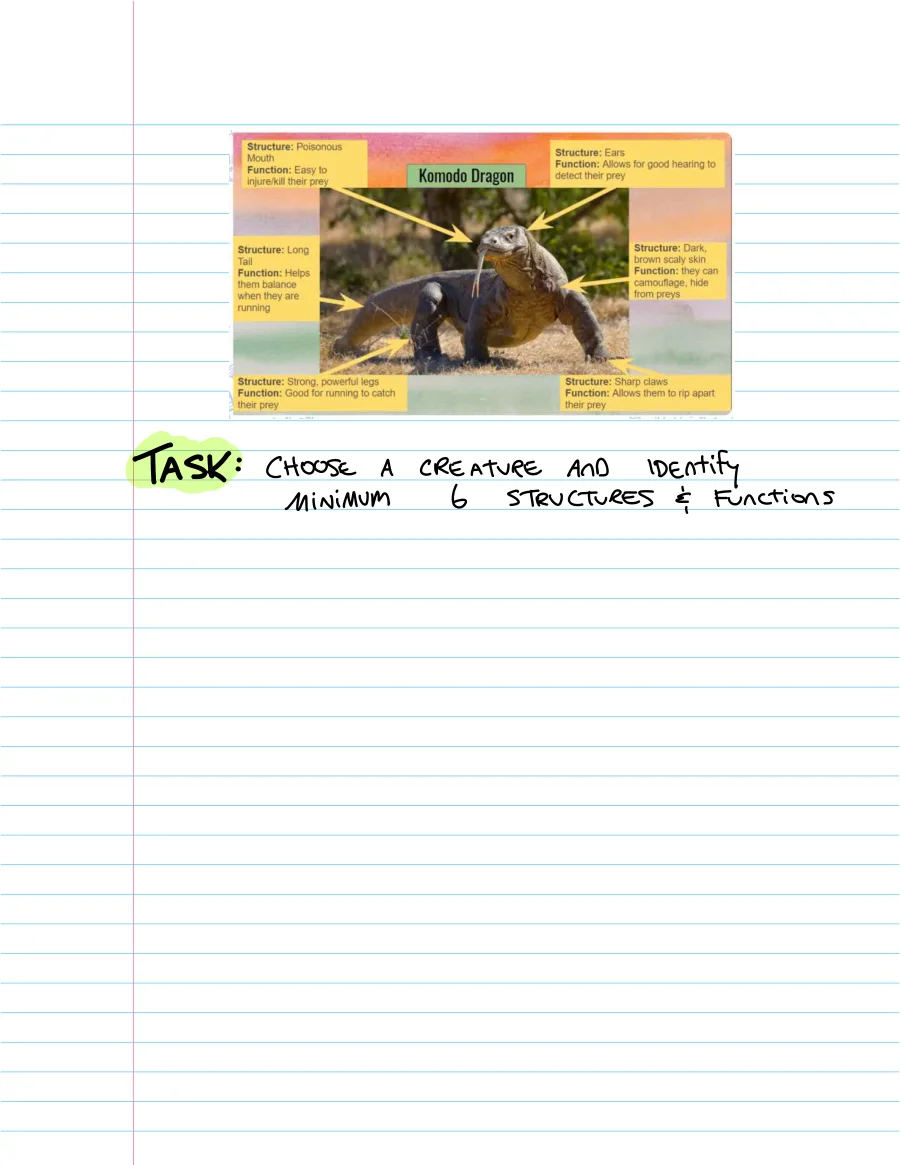
A structure is a part of an organism, such as a bird’s beak, a fish’s gills or a leaf. Its function is the job it performs.
Explain how the shape and parts of a structure help it do a job.
A structure is a part of an organism, such as a bird’s beak, a fish’s gills or a leaf. Its function is the job it performs.
Do more than name a job: identify a feature and explain how it helps. A duck’s broad, webbed feet push against water, helping it swim.
Individuals in a population vary. Across generations, inherited features that improve reproduction in an environment can become more common through natural selection. Individuals do not change their genes because they need to.
A structure is a part or arrangement, such as a cell membrane or a leaf.
A function is what that structure does.
Features of a structure can help explain how it performs its function.
The webbing increases the surface area that pushes against the water. This structure helps the duck propel itself forward when it swims.
A bird has a long, narrow beak. Suggest a food source and explain your reasoning.
A long beak could reach nectar inside a flower. The explanation connects the beak’s shape to a possible job; evidence about the bird’s actual diet would strengthen it.
No. Adaptations are inherited characteristics that become common in populations over generations.
Compare a fish fin and a whale flipper. How can different structures perform a similar function?
Both help an animal move or steer in water, even though their internal structures and evolutionary histories differ.