A pattern, not one test
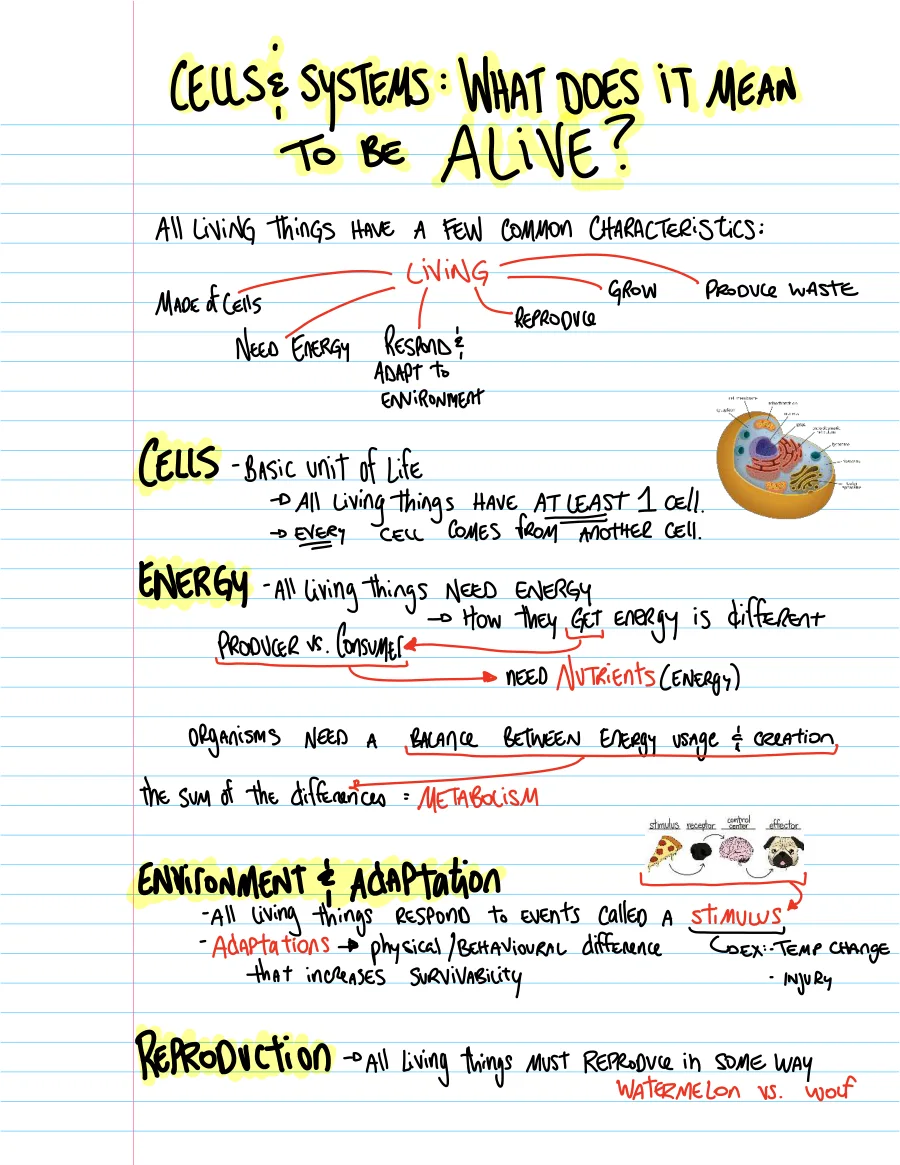
Living things are made of one or more cells. They use energy and materials, produce waste, respond to their surroundings, grow and reproduce. Look for the collection of characteristics, not just one.
Look for patterns in the characteristics of living things.
Living things are made of one or more cells. They use energy and materials, produce waste, respond to their surroundings, grow and reproduce. Look for the collection of characteristics, not just one.
Plants capture light energy; animals obtain energy from food. Metabolism describes the chemical processes in an organism that build, break down and transform materials.
A plant bending toward light is responding to its environment. Reproduction maintains a population over generations; an individual organism does not have to reproduce to be alive.
Living things are made of one or more cells.
Living things use energy and exchange materials with their surroundings.
Living things grow and respond to changes; individual characteristics must be considered together.
Look for patterns in the characteristics of living things.
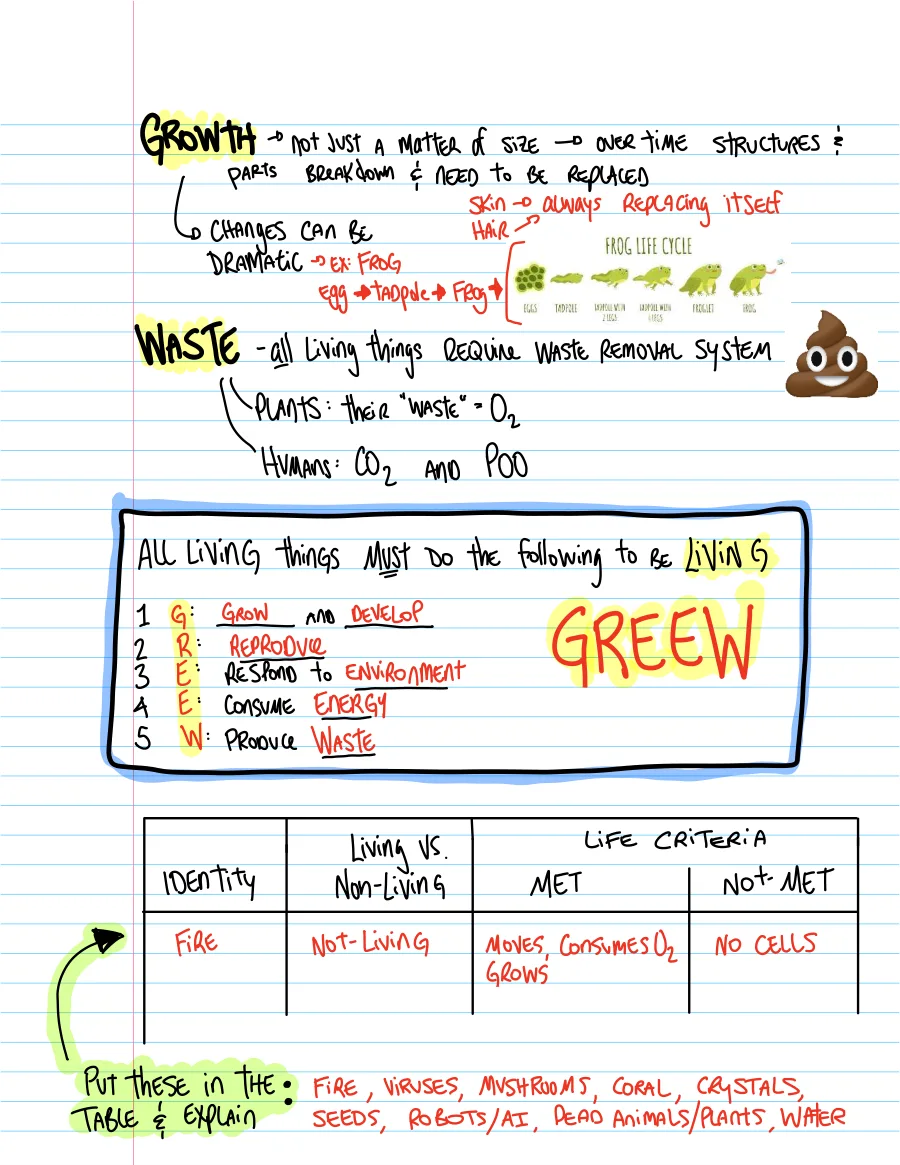
Open on YouTube →No. A fire is not made of cells and does not carry out the full set of life processes.
A flame grows and uses fuel. What evidence would you need before calling it living?
Growth and fuel use alone are insufficient. Fire is not made of cells and does not carry out the full set of life processes.
No. Many plants remain rooted but still grow and respond to stimuli.
Compare a dormant seed and a rock. What observations could help distinguish them?
A seed can germinate under suitable conditions and is made of cells; a rock does not carry out life processes.