A hidden world
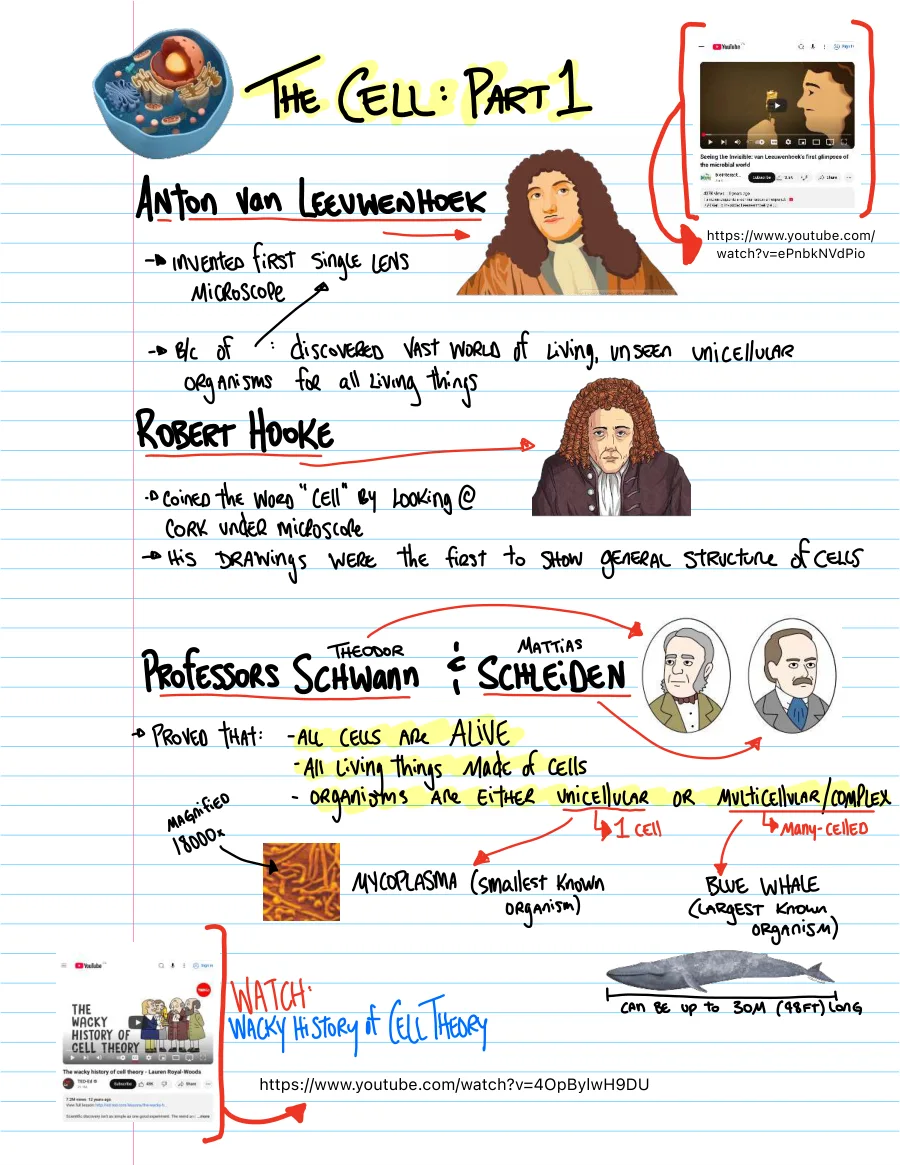
Microscopes made structures too small for unaided eyes visible. In 1665 Robert Hooke described box-like spaces in cork and called them cells; later, Antonie van Leeuwenhoek observed living microorganisms.
Discover how observations and technology changed our understanding of life.
Microscopes made structures too small for unaided eyes visible. In 1665 Robert Hooke described box-like spaces in cork and called them cells; later, Antonie van Leeuwenhoek observed living microorganisms.
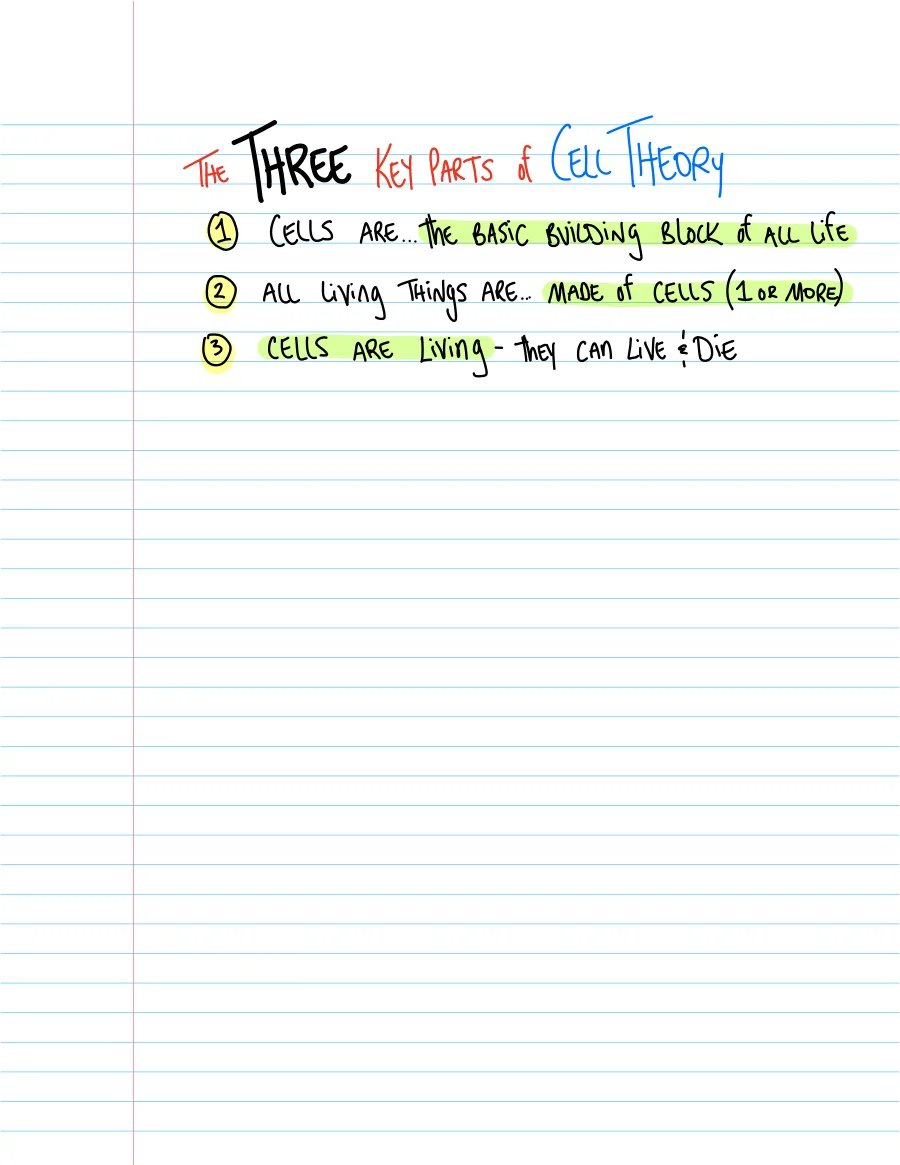
All living things are made of one or more cells. Cells are the basic unit of structure and function in living things. New cells come from pre-existing cells.
Cell theory developed as observations accumulated. Better microscopes improved the evidence scientists could collect; the theory was not the work of a single person.
Living things are made of one or more cells.
The cell is the basic unit of structure and function in living things.
New cells come from pre-existing cells.
Discover how observations and technology changed our understanding of life.
Open on YouTube →They made cells visible, allowing scientists to observe structures that cannot be seen unaided.
Why did the development of microscopes matter for cell theory?
Microscopes allowed scientists to observe cells and microorganisms directly and compare evidence across many living things.
No. Viruses are not cells and need a host cell to reproduce, which is one reason their status as living is debated.
A new cell is observed dividing from an existing cell. Which part of cell theory does this support?
It supports the principle that new cells arise from pre-existing cells.