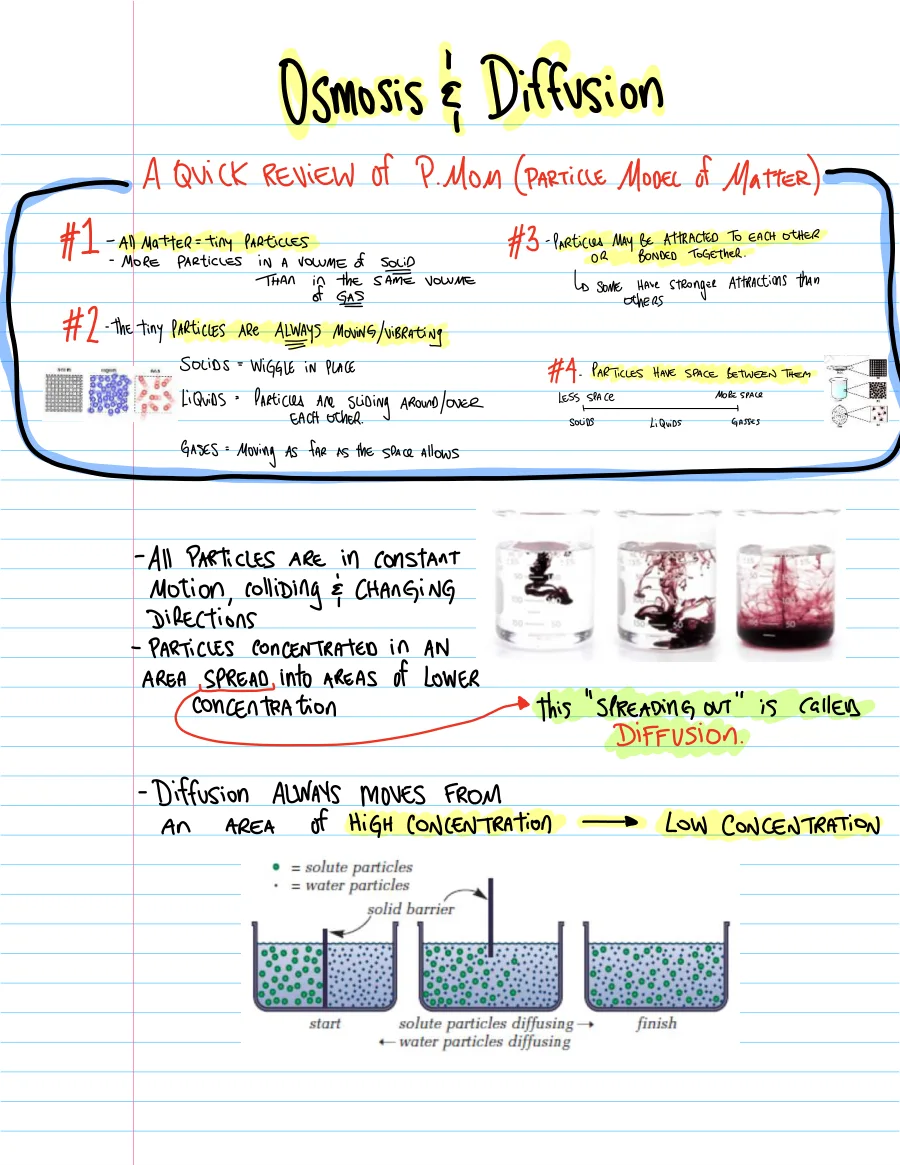
Particles are always moving
Particles move randomly and collide. Diffusion is the net movement of particles from an area of higher concentration to an area of lower concentration.
Follow the movement of particles and water across a membrane.
Particles move randomly and collide. Diffusion is the net movement of particles from an area of higher concentration to an area of lower concentration.
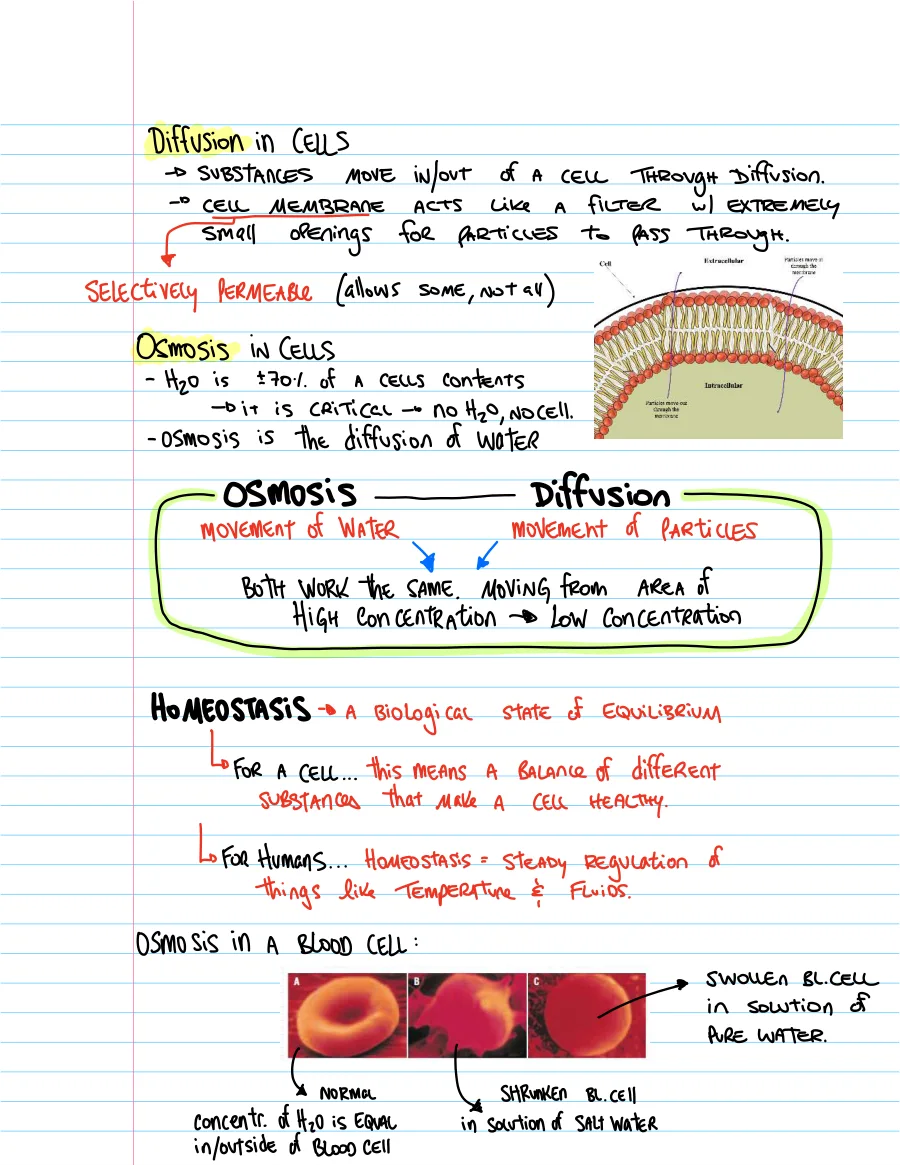
A selectively permeable membrane allows some substances to pass more readily than others. Whether a substance crosses depends on the substance and the membrane.
Osmosis is the net movement of water across a selectively permeable membrane. A difference in solute concentration can affect the direction of net water movement.
Particles move randomly in both directions; the arrow shows the net direction. Whether particles cross depends on the membrane.
Particles move randomly; overall movement tends from higher to lower concentration.
Some substances cross more readily than others, depending on the membrane and the substance.
Osmosis is the net movement of water across a selectively permeable membrane.
Follow the movement of particles and water across a membrane.
Open on YouTube →Water can move into the cell by osmosis; the cell wall resists expansion and pressure develops.
A membrane lets water pass but not a dissolved solute. Compare net water movement when one side has more solute.
Under these conditions, net water movement is toward the side with more solute until the driving forces balance. Water molecules still move in both directions.
No. Random motion continues, but there is no net movement across the system at dynamic equilibrium.
If a smell spreads across a room, why is diffusion a useful model?
Gas particles move randomly and spread from a region of higher concentration toward areas of lower concentration.