Meet the microscope
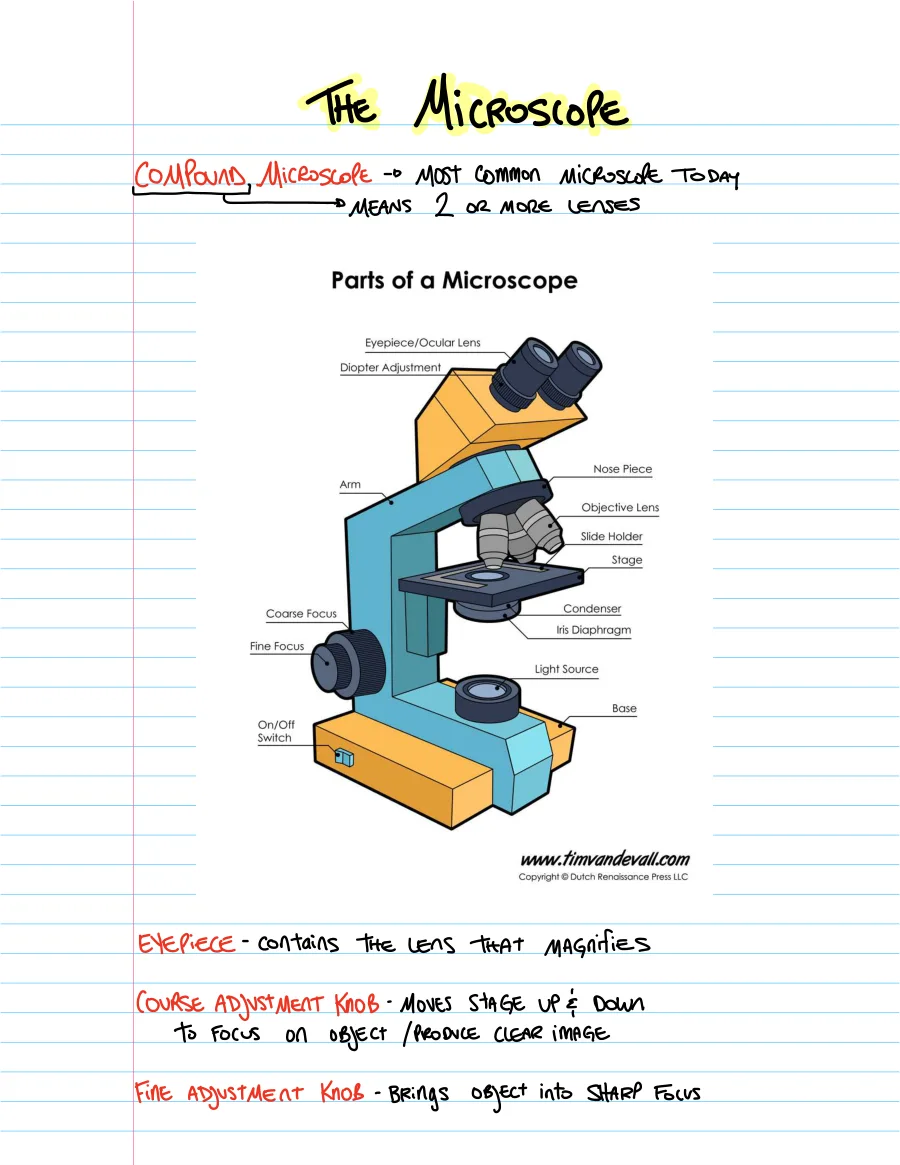
The eyepiece and objective lenses magnify the image. The stage supports the slide, the light source illuminates it and the diaphragm controls the light passing through.
Use magnification and careful observation to study small structures.
The eyepiece and objective lenses magnify the image. The stage supports the slide, the light source illuminates it and the diaphragm controls the light passing through.
Place and secure the slide. Begin with the lowest-power objective and follow your teacher’s focusing procedure. Use fine focus to sharpen the image; use fine focus only at higher power.
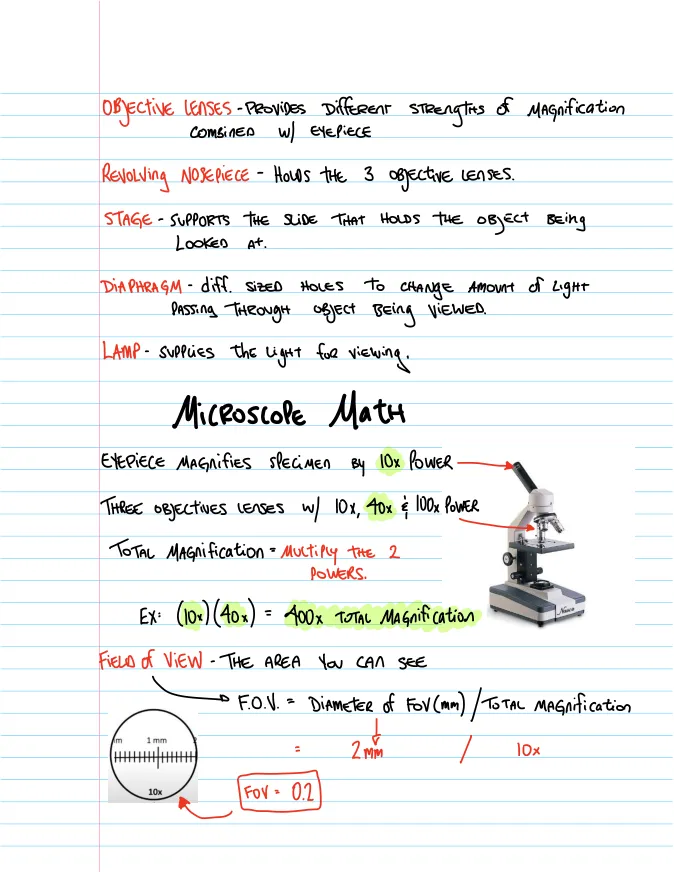
Total magnification = eyepiece magnification × objective magnification. The field of view is the area visible through the eyepiece; as magnification increases, the visible area generally gets smaller.
Choose the two lenses. Multiply their powers to find total magnification.
Light passes through lenses that magnify an image. Start with the lowest-power objective.
Multiply the eyepiece magnification by the objective magnification.
Use coarse focus at low power, then fine focus; follow your teacher’s instrument instructions.
Use magnification and careful observation to study small structures.
Open on YouTube →10 × 40 = 400×. A larger magnification does not automatically mean a clearer image.
A microscope has a 10× eyepiece and a 40× objective. What is the total magnification?
10 × 40 = 400×. Start at low power to locate the specimen before switching objectives.
No. An image can be magnified without becoming clearer if the microscope cannot resolve the detail.
With a 10× eyepiece, what objective produces 100× total magnification?
A 10× objective: 10 × 10 = 100×.