Specialized cells
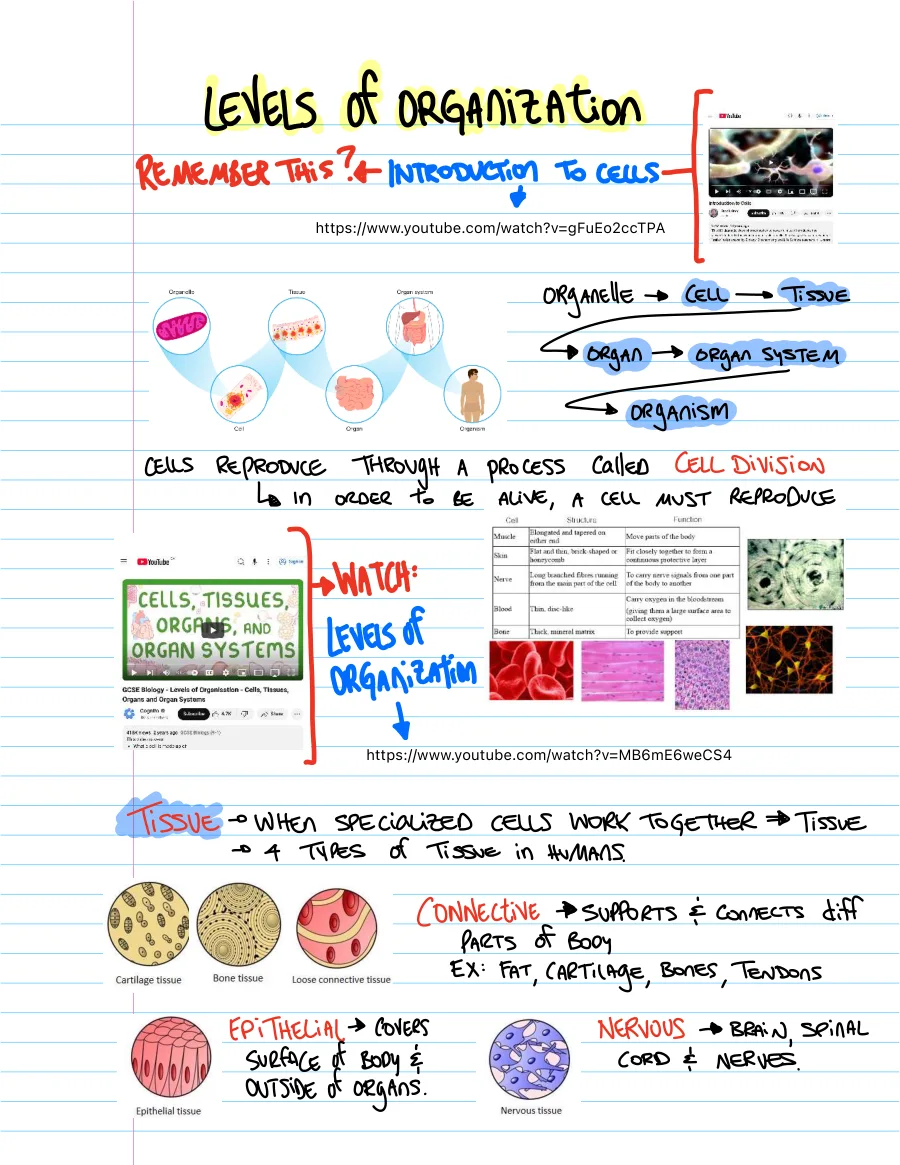
A multicellular organism contains different types of cells. A muscle cell and a nerve cell have different structures that help them perform different functions.
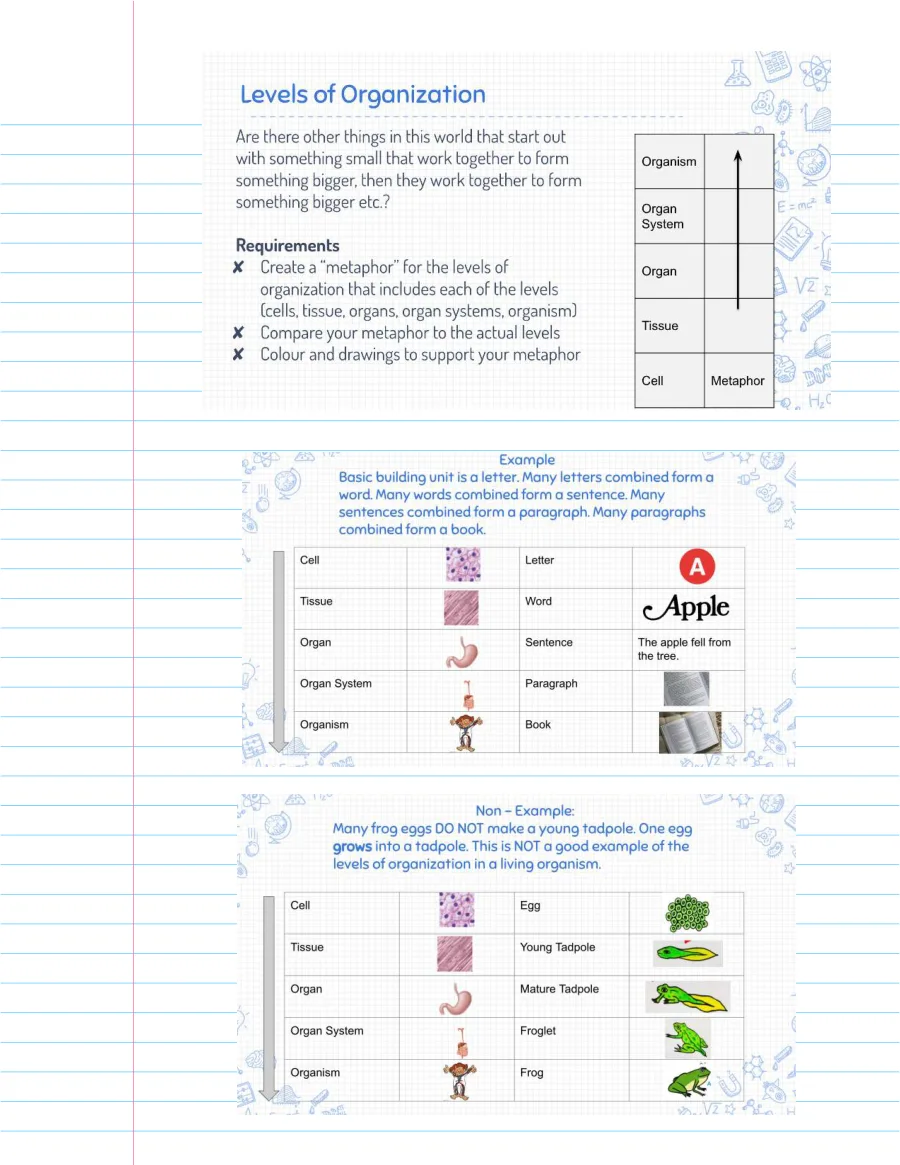
Trace how specialized cells build tissues, organs and organ systems.
A multicellular organism contains different types of cells. A muscle cell and a nerve cell have different structures that help them perform different functions.
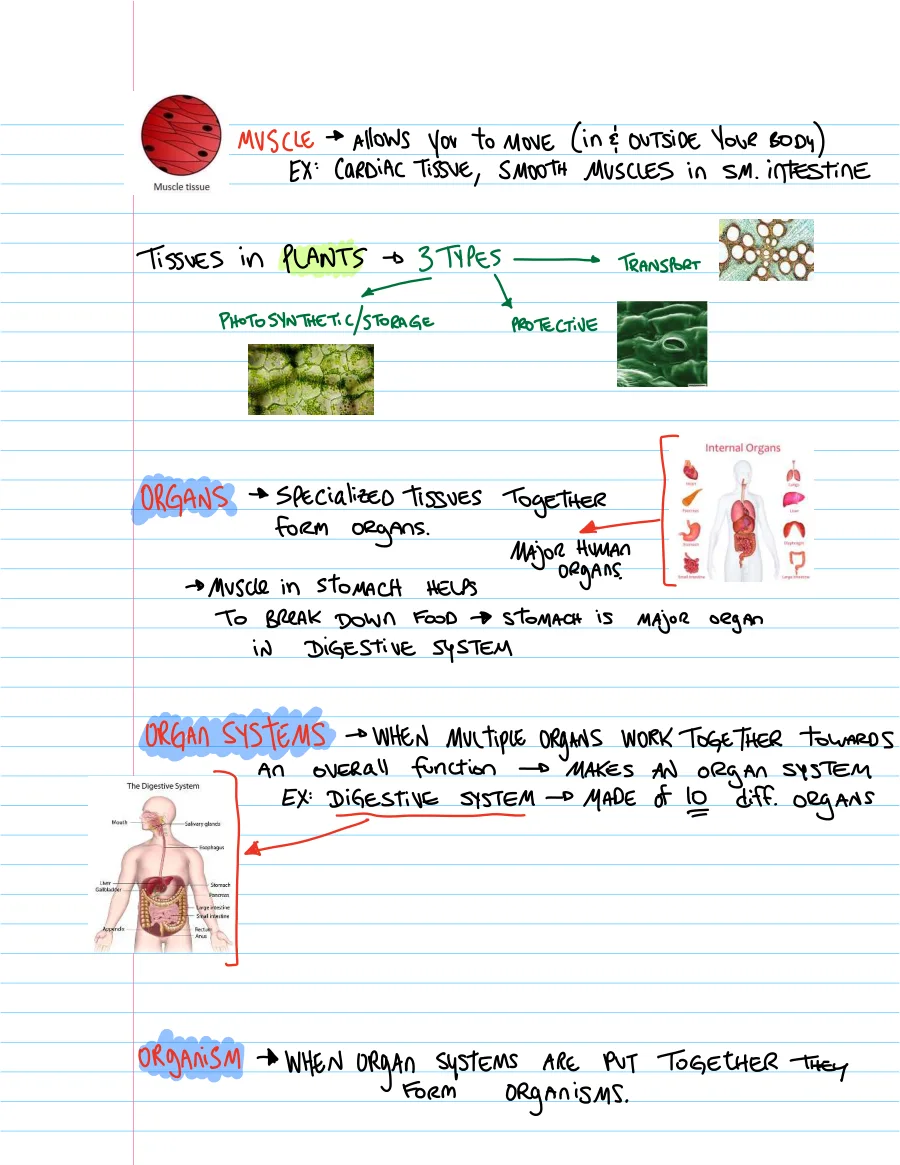
A tissue is a group of cells and surrounding material working together. Different tissues form an organ; the heart contains muscle, connective, nervous and epithelial tissues.
Organs work together in organ systems. Systems connect with one another: circulation delivers materials that cells throughout the body need.
A tissue is a group of cells and surrounding material working together.
An organ contains different tissues working together.
Organs cooperate in systems; multiple systems support an organism.
Trace how specialized cells build tissues, organs and organ systems.
Open on YouTube →Muscle cell → muscle tissue → heart → circulatory system.
Put these in order: heart, muscle tissue, circulatory system, muscle cell.
Muscle cell → muscle tissue → heart → circulatory system.
No. An organ is made of different tissues that work together.
Name an organ system and describe how one of its organs helps the whole organism.
For example, the respiratory system includes the lungs, which exchange oxygen and carbon dioxide with blood.