The boundary and interior
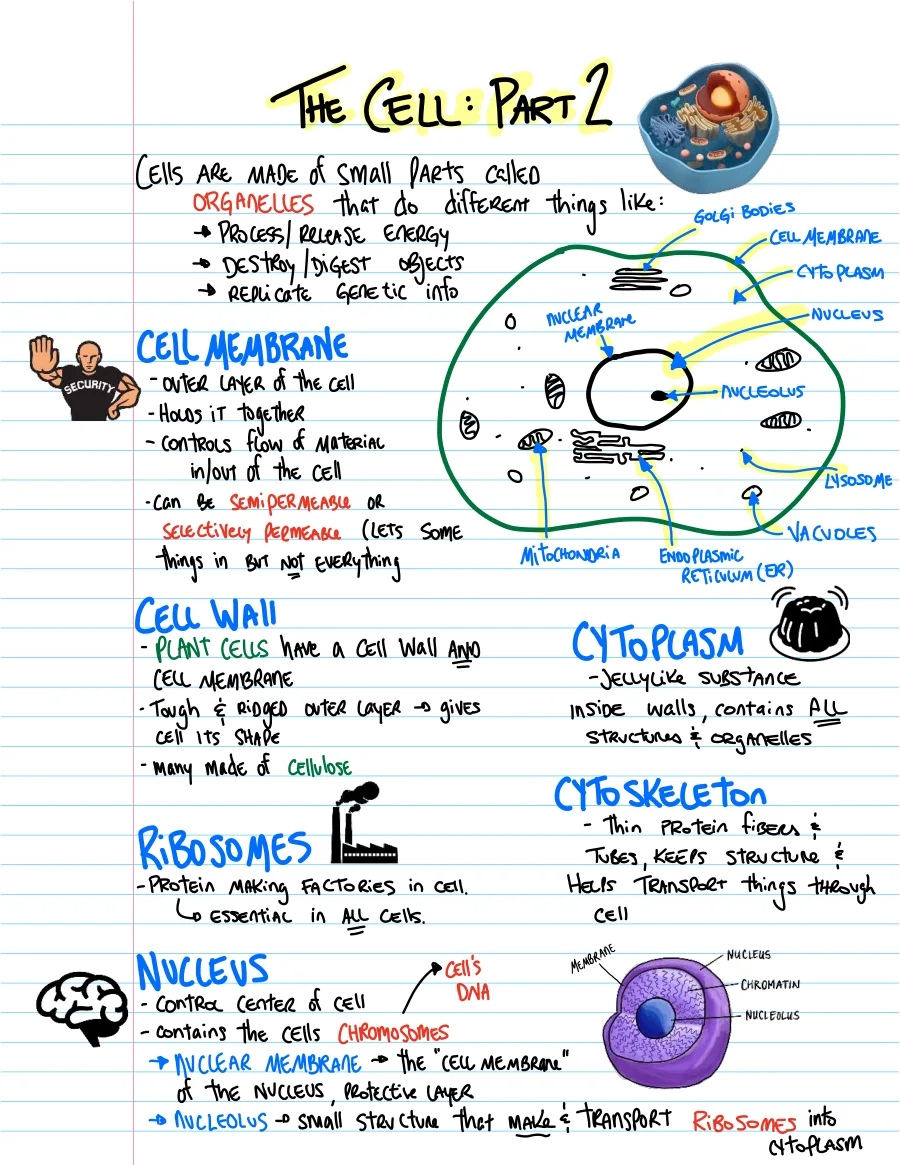
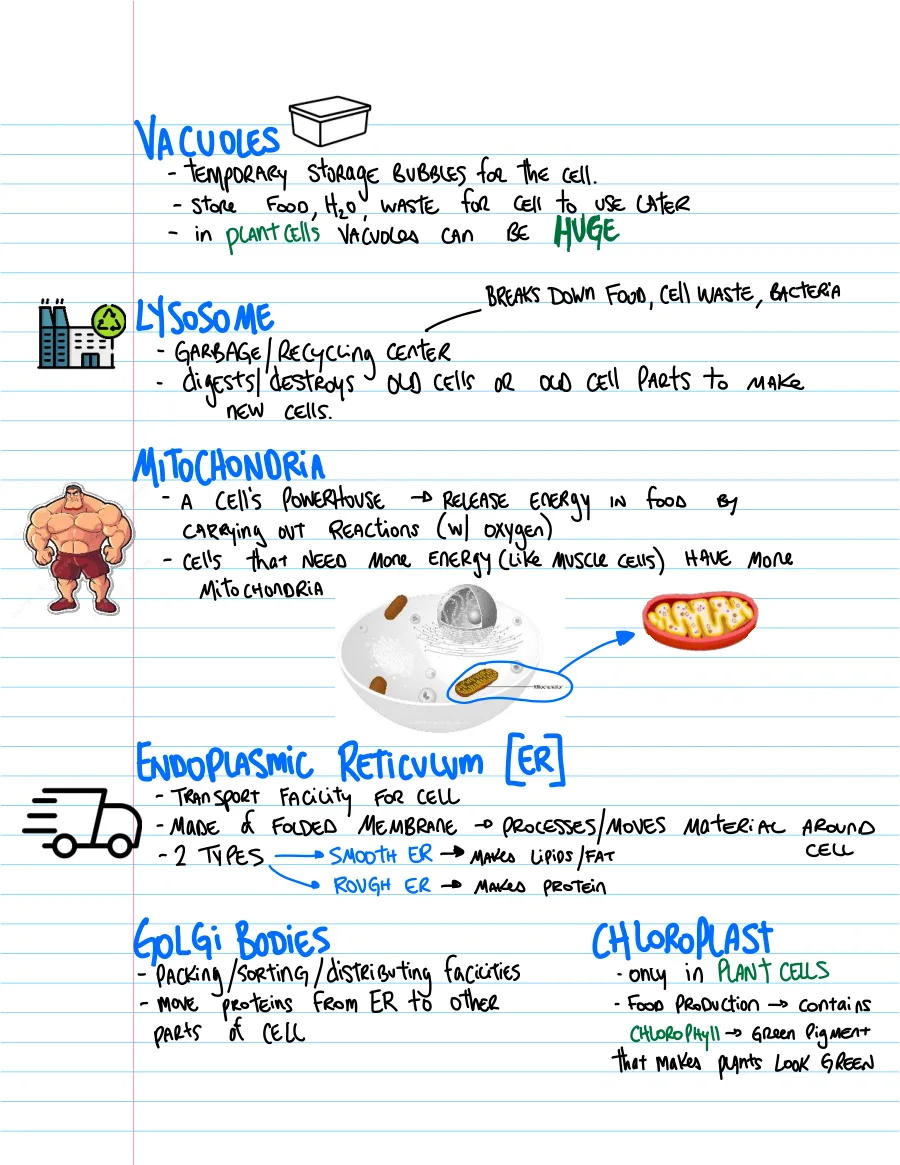
The cell membrane controls which substances enter and leave. Cytoplasm is the material inside the cell where structures are suspended and many reactions occur.
Explore cell structures and connect each part to its job.
The cell membrane controls which substances enter and leave. Cytoplasm is the material inside the cell where structures are suspended and many reactions occur.
In typical plant and animal cells, the nucleus contains most DNA. Ribosomes assemble proteins. Mitochondria transfer energy from nutrients into forms cells can use.
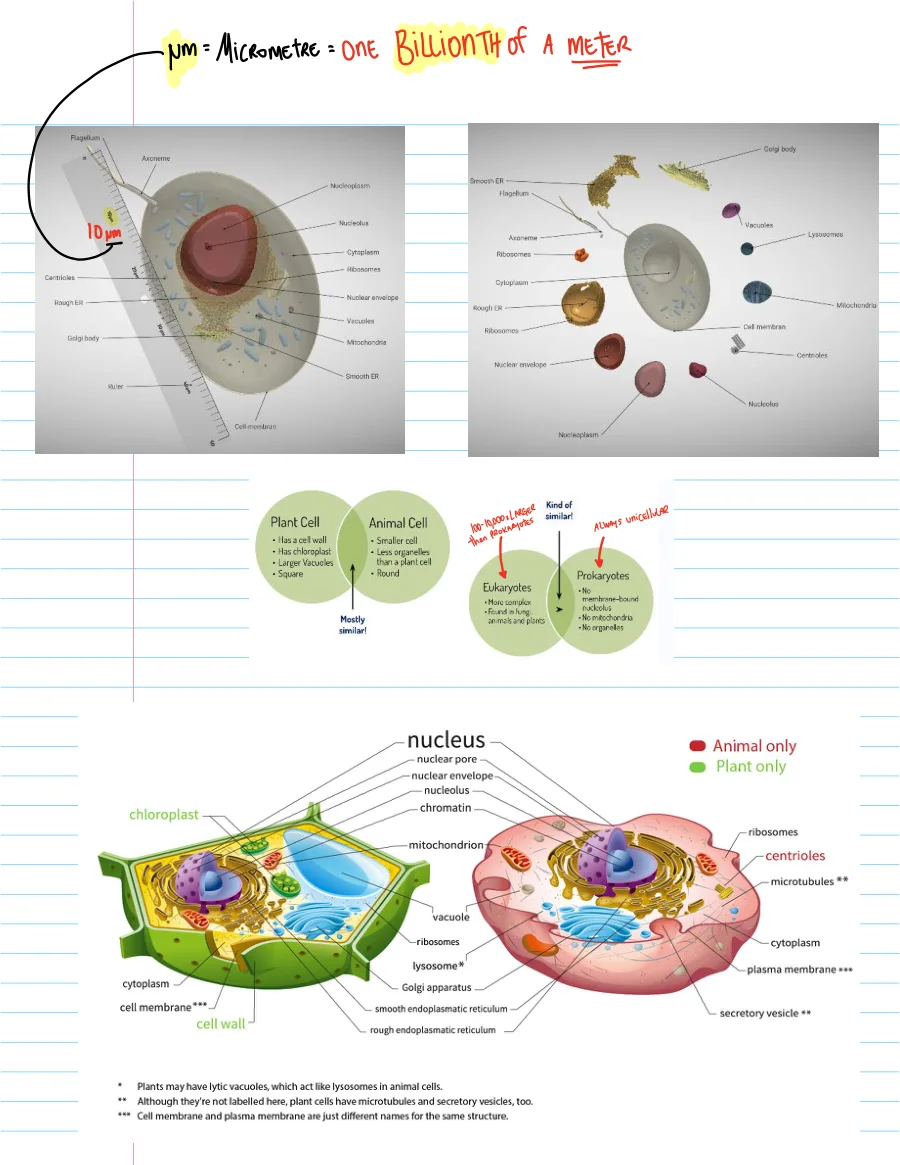
Both have a membrane, cytoplasm, mitochondria and, typically, a nucleus. Plant cells have a supporting cell wall and a large central vacuole; photosynthetic plant cells have chloroplasts. Vacuoles store materials.
Switch between Animal Cell and Plant Cell. Select an organelle to explore its role, or try the labelling quiz.
Find the nucleus, cell membrane and mitochondria in both models. Then switch to the plant cell and locate the cell wall, chloroplasts and large central vacuole.
Choose one structure shared by both cells and one feature of the plant cell. Explain how each helps the cell function. This is a simplified model; not every plant cell contains chloroplasts.
If the model cannot load on your device, use the illustrated class notes above and the pathway below to trace the same structures.
Explore cell structures and connect each part to its job.
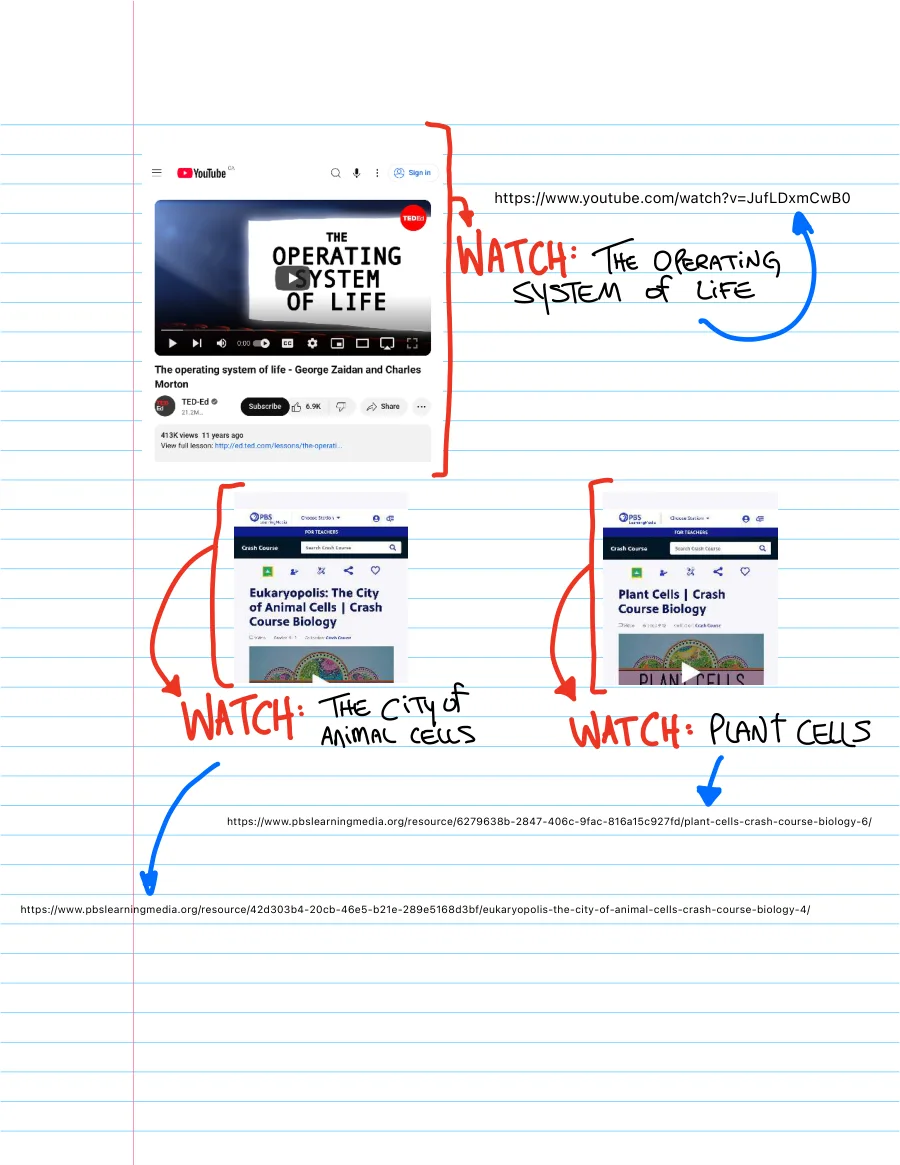
Open on YouTube →Its structures cooperate: for example, the membrane regulates materials that the cell uses to carry out its processes.
A city uses a power station, a boundary and a library of instructions. Which cell parts might each represent?
Mitochondria transfer usable energy, the membrane regulates exchange, and the nucleus contains most DNA. Analogies help, but a cell is not literally a city.
Yes. Plant cells have mitochondria as well as chloroplasts in photosynthetic cells.
Why might a cell that exports proteins need both ribosomes and a cell membrane?
Ribosomes assemble proteins; the membrane forms a boundary through which materials can be transported.