Follow the air
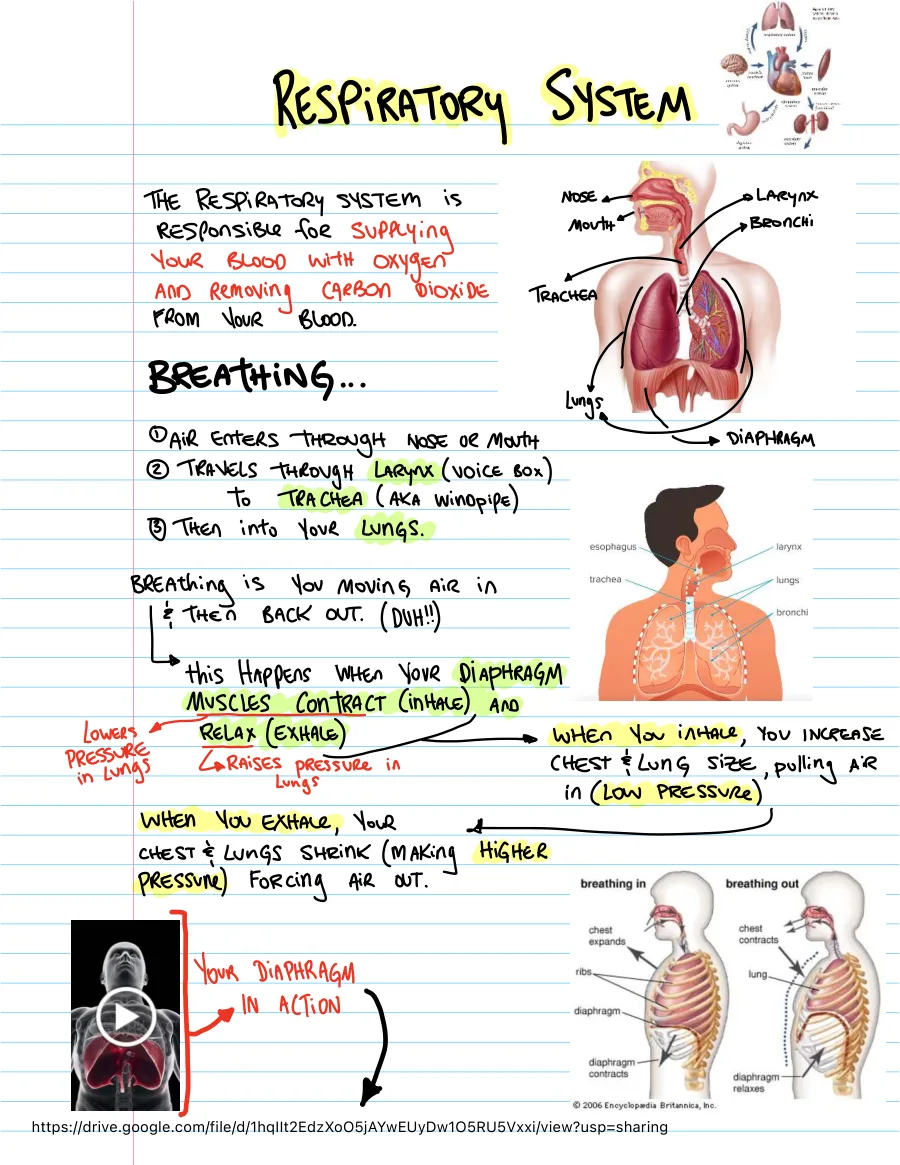
Air enters through the nose or mouth, passes the larynx and trachea, and travels through branching bronchi and smaller airways to the lungs.
Trace air to the lungs and explain gas exchange.
Air enters through the nose or mouth, passes the larynx and trachea, and travels through branching bronchi and smaller airways to the lungs.
When the diaphragm contracts, it moves downward and the chest cavity expands, helping air enter. When it relaxes, the cavity becomes smaller and air moves out.
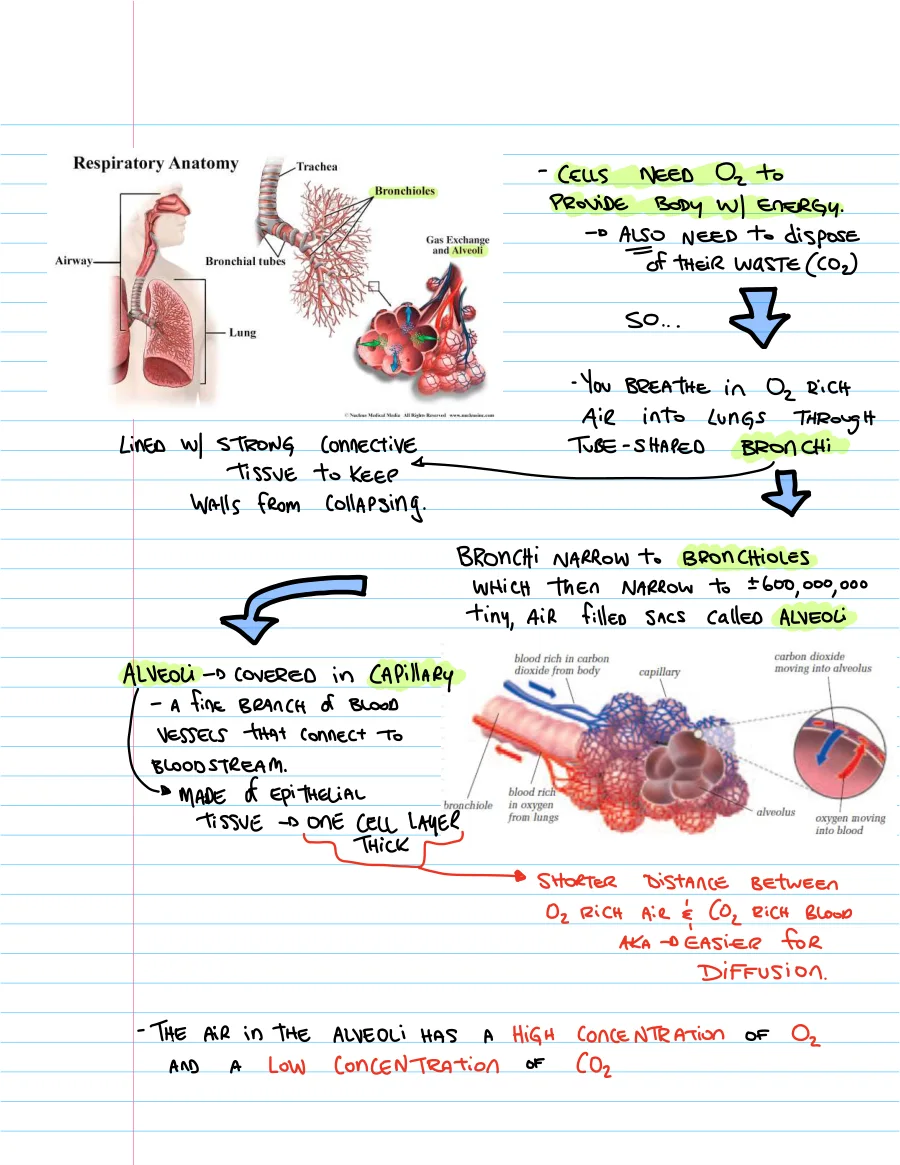
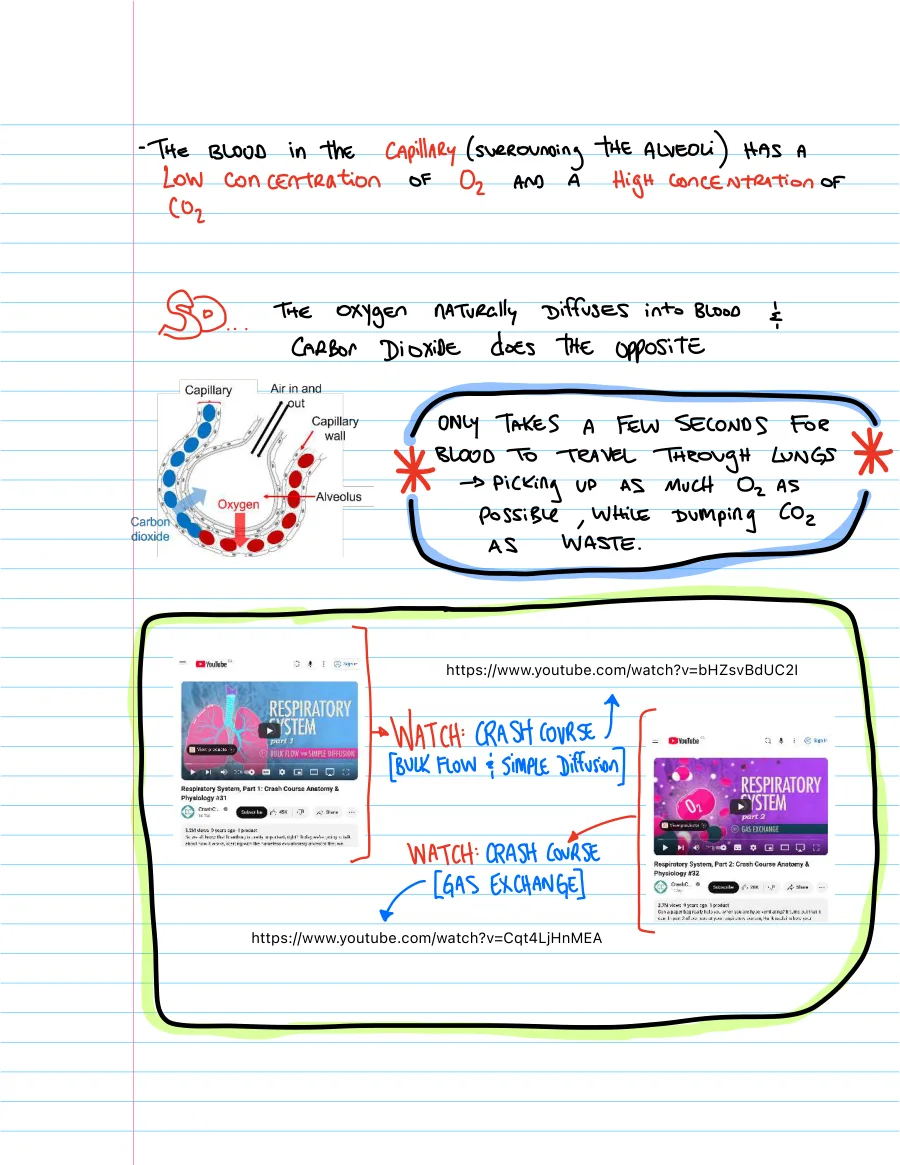
Alveoli are tiny air sacs surrounded by capillaries. Oxygen diffuses from air into blood; carbon dioxide diffuses from blood into the air spaces to be breathed out.
Select the trachea, bronchi and lung lobes, then change the breathing rate. The microscopic alveoli are shown in the lesson diagram below.
Keep tidal volume constant. Predict what doubling the breathing rate will do to the air moved per minute. Test your prediction.
Explain why moving air into the lungs is different from exchanging gases with blood.
If the model cannot load on your device, use the illustrated class notes above and the pathway below to trace the same structures.
A simplified model: gas exchange happens across thin alveolar and capillary walls.
Trace air to the lungs and explain gas exchange.
Open on YouTube →The lungs exchange gases with blood; circulation transports those gases between the lungs and body cells.
Why are alveoli surrounded by capillaries and why are their walls thin?
Capillaries bring blood close to the air. Thin walls and a large exchange surface support diffusion over a short distance.
No. Breathing moves air; cellular respiration is a chemical process in cells that transfers energy from nutrients.
Trace an oxygen molecule from inhaled air to a body cell.
Airways → alveoli → blood in capillaries → circulation → body tissue; oxygen diffuses into cells.