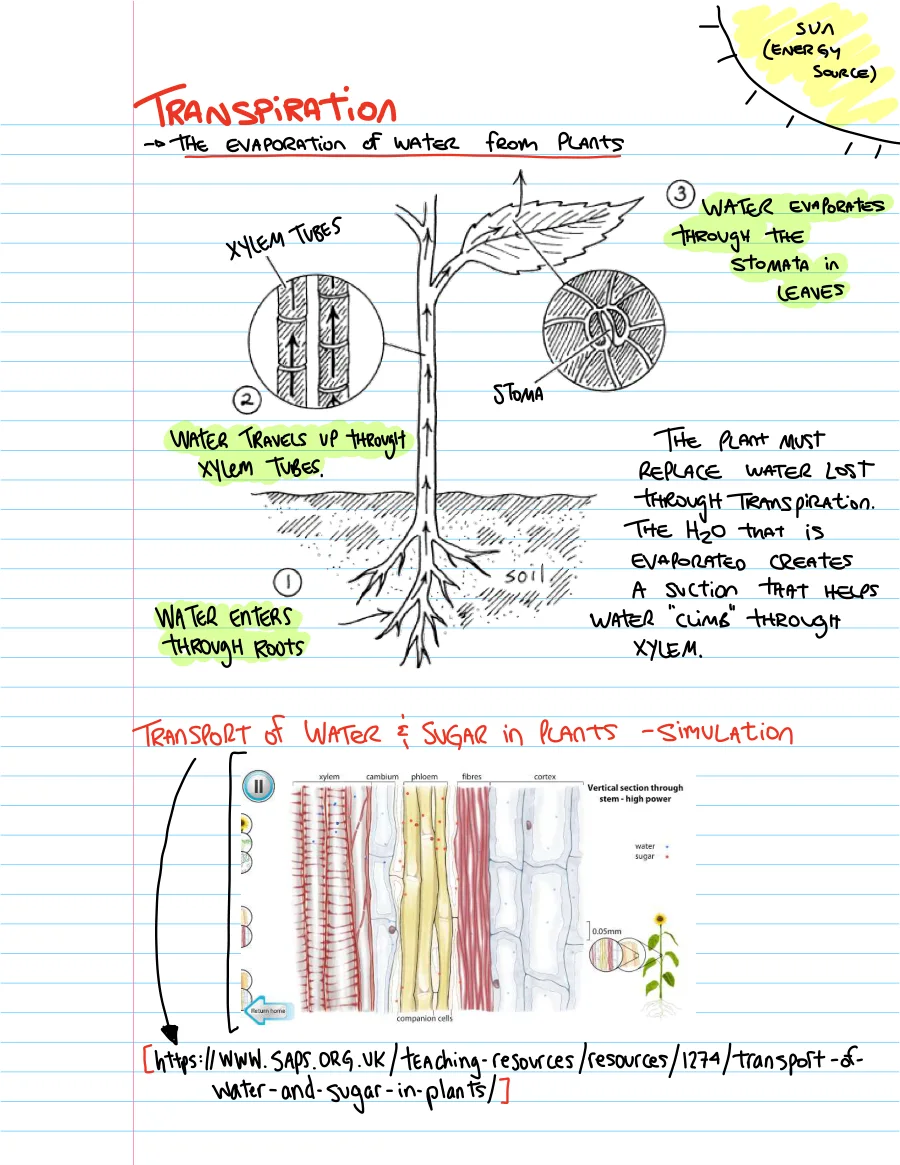
Water enters at the roots
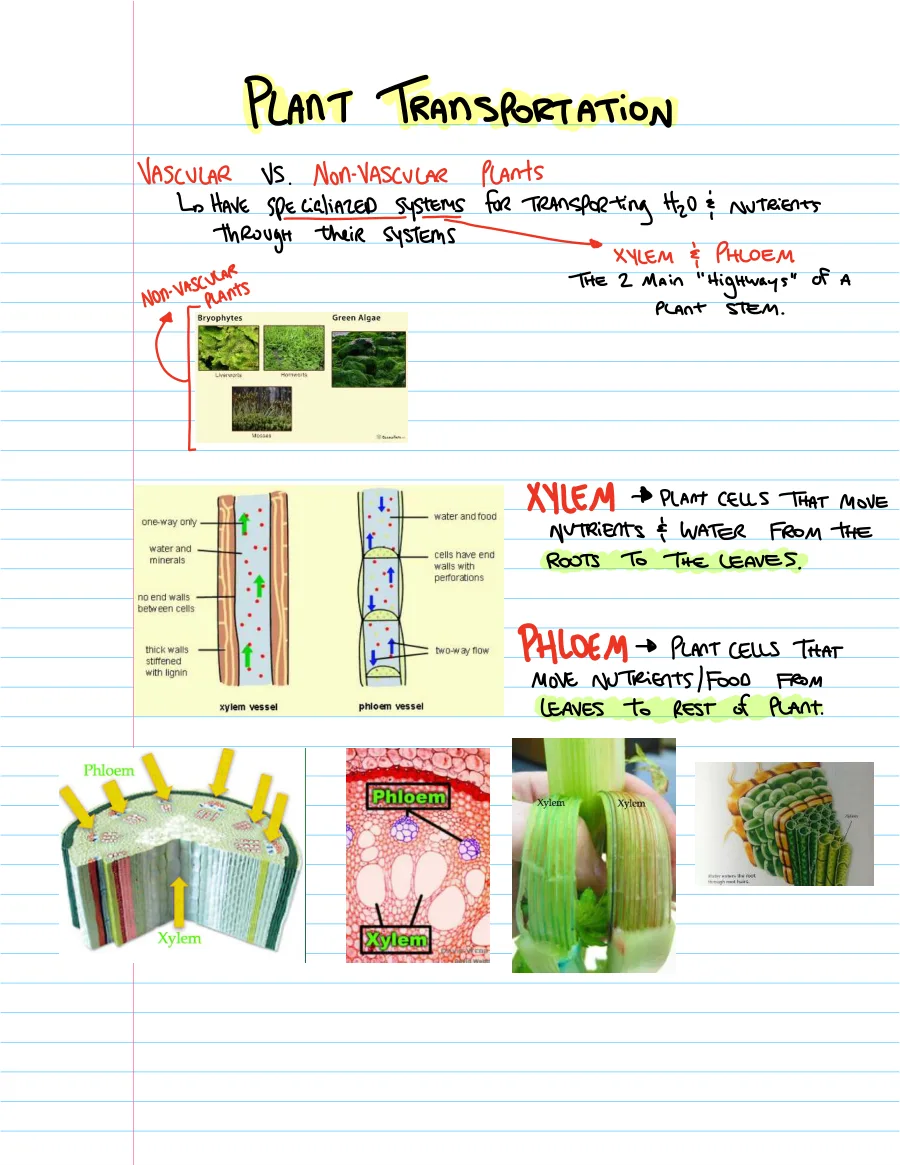
Roots absorb water and dissolved minerals from soil. Vascular plants have transport tissues that carry materials through the plant.
Connect roots, stems and leaves through the movement of water and sugars.
Roots absorb water and dissolved minerals from soil. Vascular plants have transport tissues that carry materials through the plant.
Xylem moves water and minerals, mostly upward from roots. Water evaporates from leaves, mainly through stomata; this loss is called transpiration and helps pull water upward.
Phloem carries dissolved sugars from sources, such as leaves, to growing or storage regions. Unlike the usual upward xylem flow, phloem transport can occur in different directions between sources and sinks.
Roots absorb water and dissolved minerals from the soil.
Xylem carries water and minerals through the plant, largely upward from the roots.
Phloem transports sugars from sources to parts of the plant that use or store them.
Connect roots, stems and leaves through the movement of water and sugars.
Open on YouTube →Water moves through xylem in the root and stem to the leaf; evaporation from leaves helps pull water upward.
Trace water from soil to the air around a leaf.
Soil → roots → xylem in root and stem → leaf → evaporation and exit through stomata.
No. Phloem transports sugars between sources and sinks, and its direction depends on their locations.
Why might closing stomata help a plant on a dry day, and what is a trade-off?
Closing stomata reduces water loss, but it can also limit carbon dioxide entering the leaf for photosynthesis.