Mechanical and chemical digestion
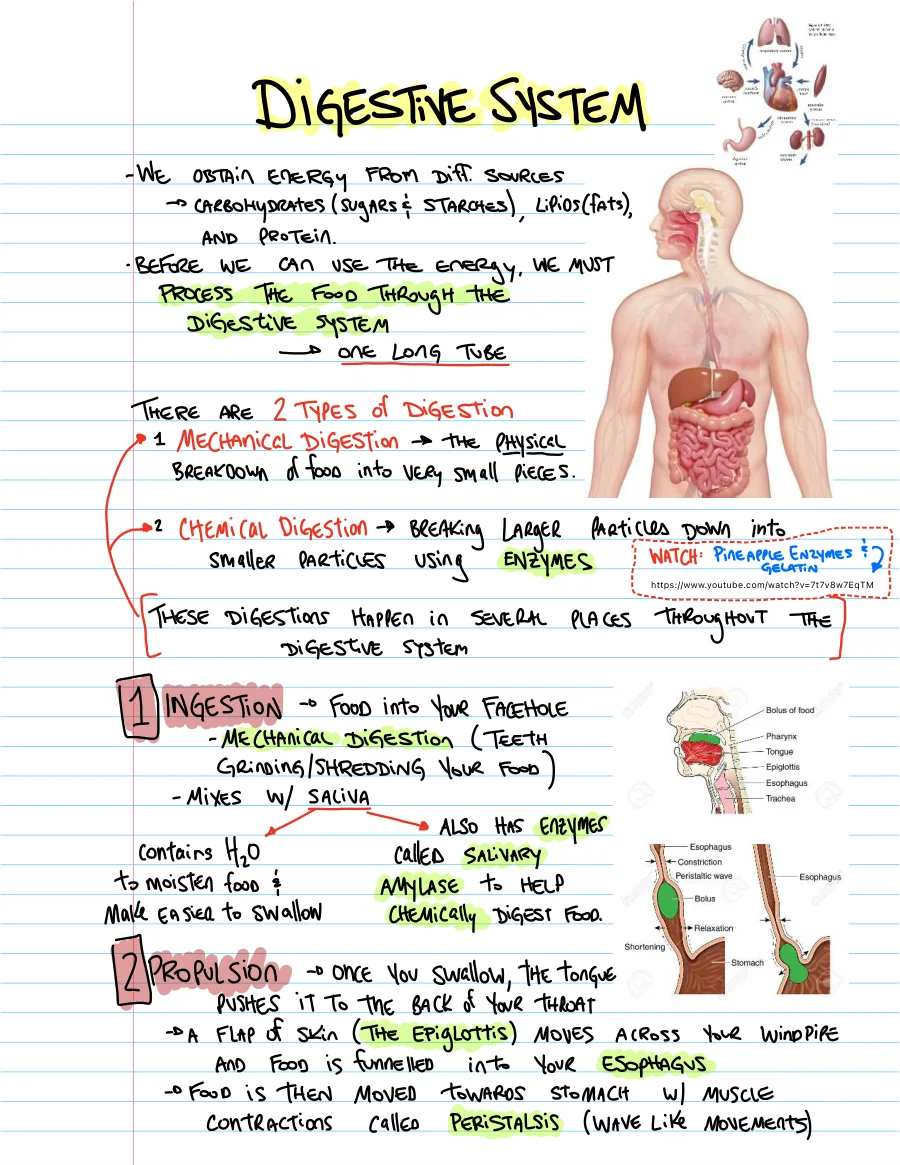
Mechanical digestion physically breaks food into smaller pieces. Chemical digestion uses substances including enzymes to break large molecules into smaller molecules.
Follow food as it is broken down and nutrients are absorbed.
Mechanical digestion physically breaks food into smaller pieces. Chemical digestion uses substances including enzymes to break large molecules into smaller molecules.
Chewing begins in the mouth. Swallowed food moves down the esophagus by muscular contractions called peristalsis, then mixes in the stomach before entering the small intestine.
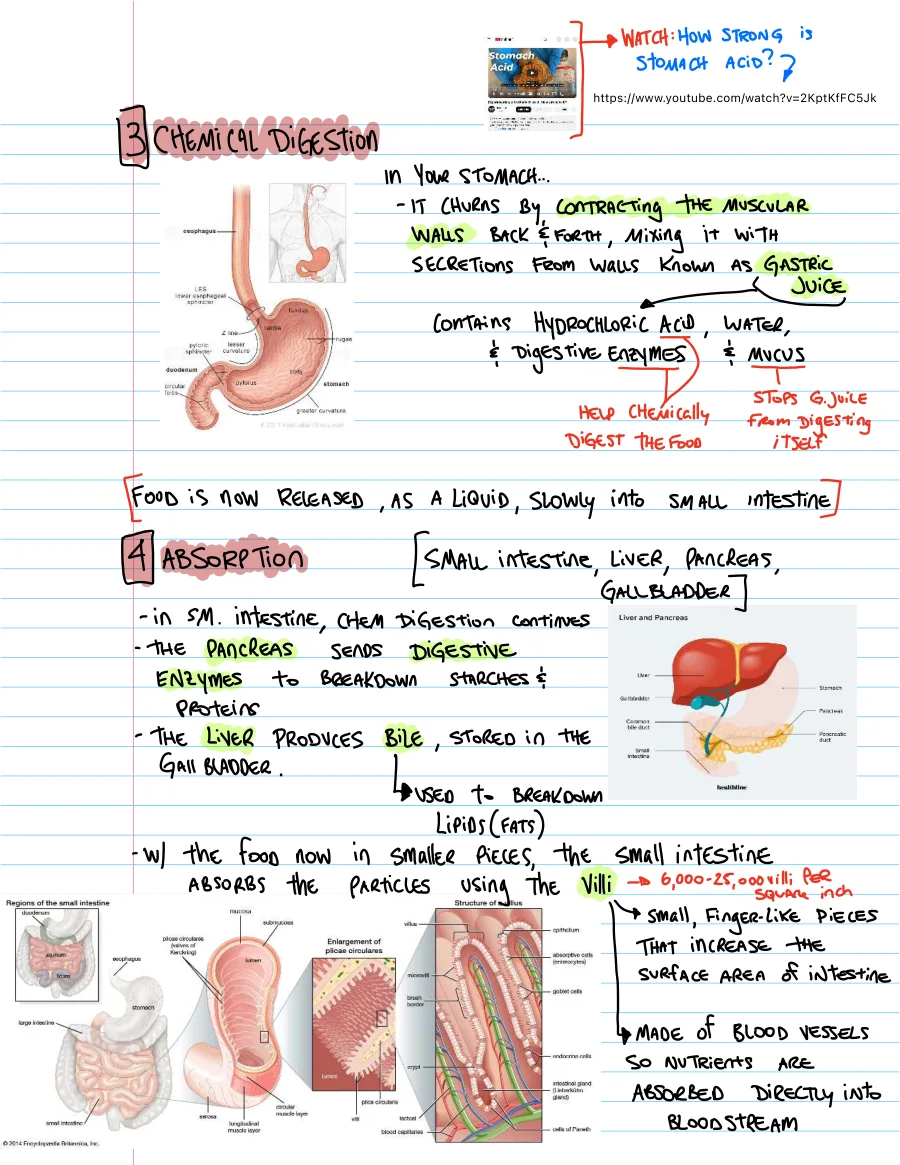
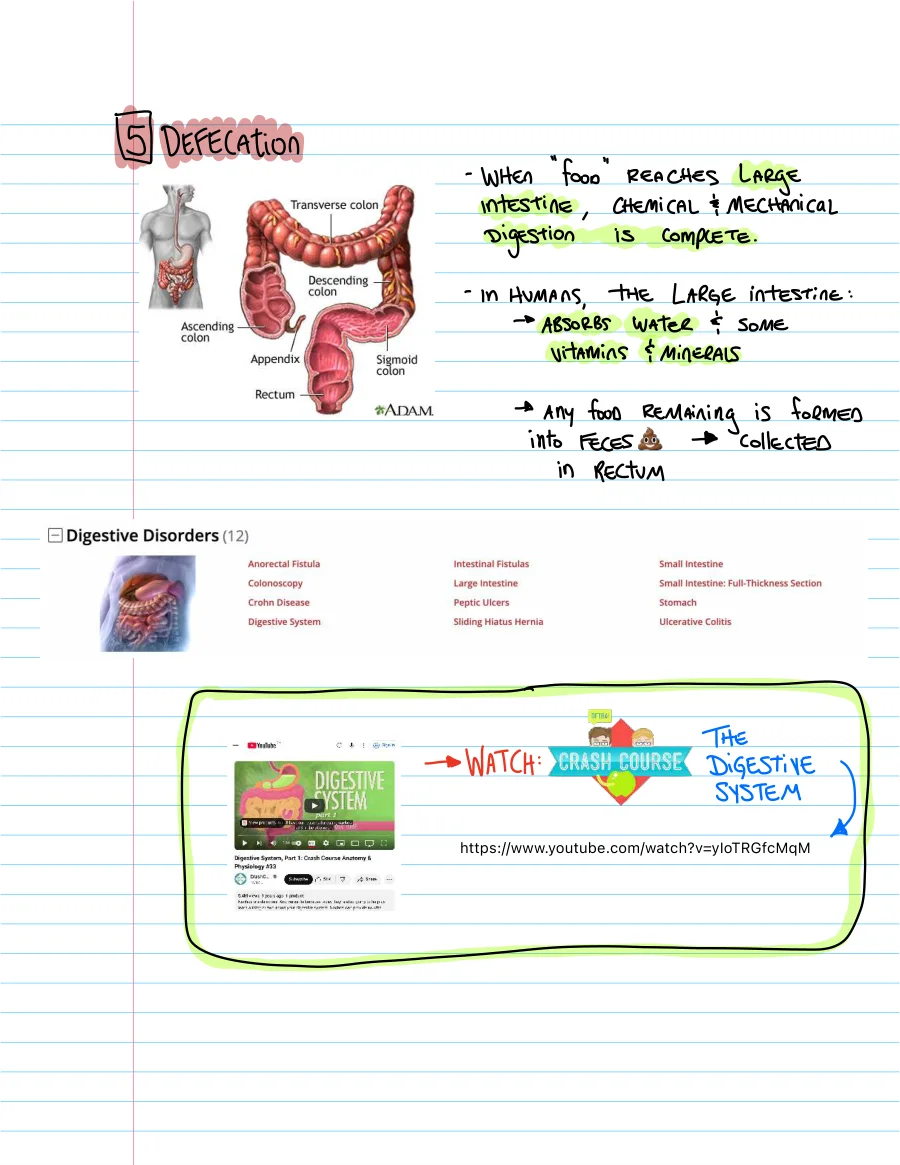
Most nutrient absorption happens in the small intestine. Nutrients enter blood or lymph and can be transported to cells. The large intestine absorbs water; remaining material is eliminated.
Select organs to investigate their roles in digestion.
Find the stomach, small intestine and large intestine. Compare what happens in each.
Explain where food is broken down, where most nutrients are absorbed and where water is recovered. Food does not pass through the liver or pancreas.
If the model cannot load on your device, use the illustrated class notes above and the pathway below to trace the same structures.
Follow food as it is broken down and nutrients are absorbed.
Open on YouTube →After digestion and absorption in the small intestine, the circulatory system transports nutrients to body tissues.
Explain one difference between chewing and the action of an enzyme.
Chewing physically breaks food into smaller pieces. An enzyme helps chemically break molecules into smaller molecules.
No. Important digestion and most nutrient absorption occur in the small intestine.
Why is absorption necessary after a large food molecule is broken down?
Small nutrient molecules must cross the intestinal lining into blood or lymph to be transported to body cells.