Two connected circuits
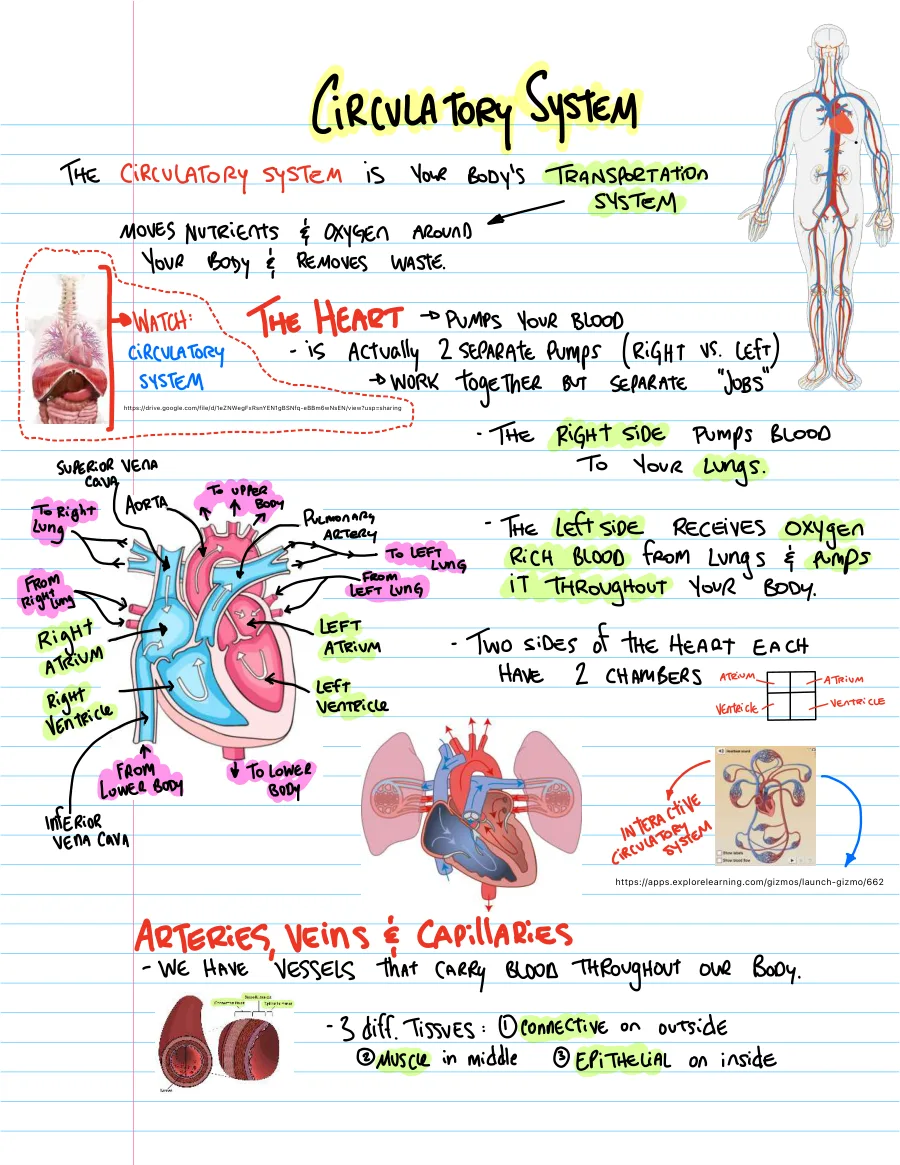
The right side of the heart pumps blood toward the lungs. The left side pumps blood to the body. Blood returns to the heart after each circuit.
Follow blood through the heart, lungs and body.
The right side of the heart pumps blood toward the lungs. The left side pumps blood to the body. Blood returns to the heart after each circuit.
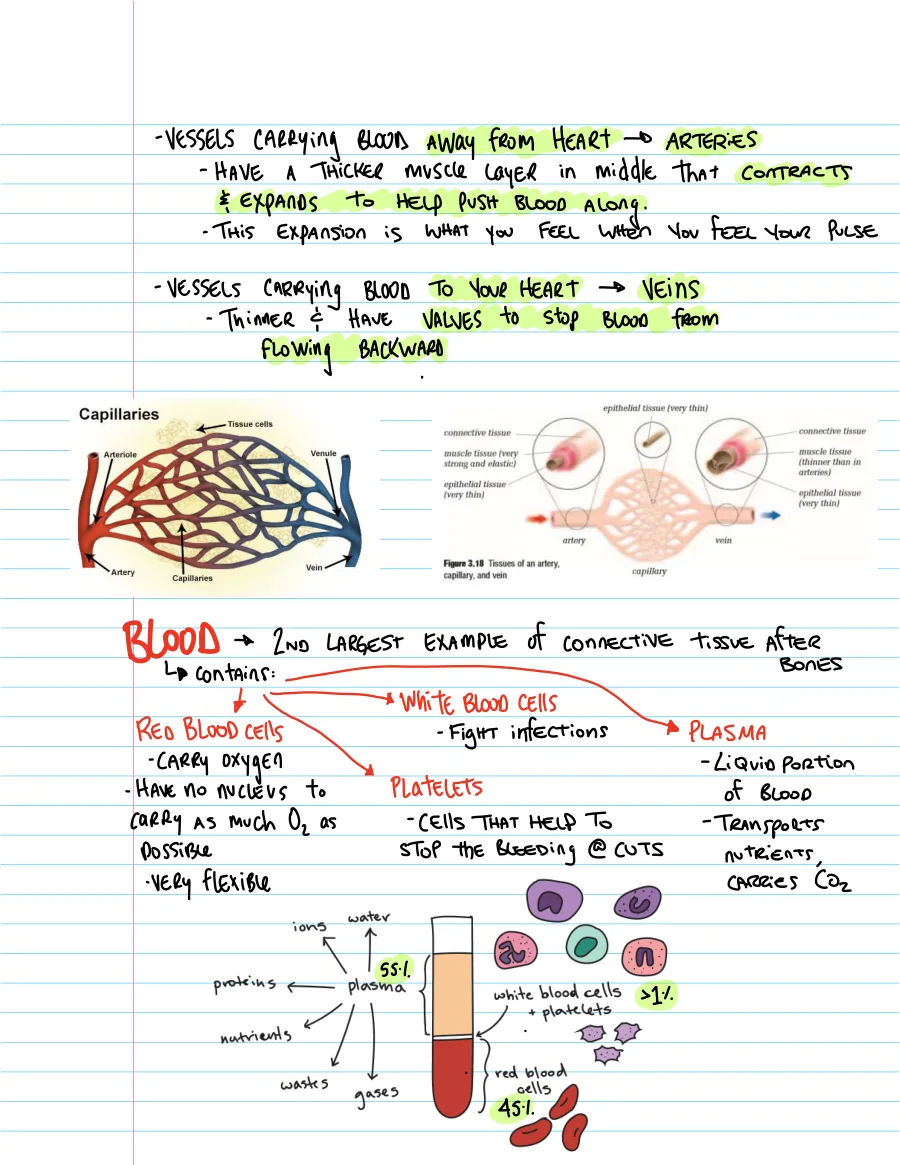
Arteries carry blood away from the heart; veins carry it toward the heart. Capillaries have thin walls that support exchange with surrounding tissues.
Blood carries oxygen, nutrients and wastes. Red blood cells carry much of the oxygen; plasma carries dissolved materials. White blood cells and platelets have other important roles.
Rotate the heart, select its chambers and follow the two circuits.
Keep stroke volume constant. Compare the cardiac output at rest with a faster heart rate.
Trace blood from the right ventricle to the lungs and back to the left side of the heart. Red and blue indicate oxygen level; blood is never blue.
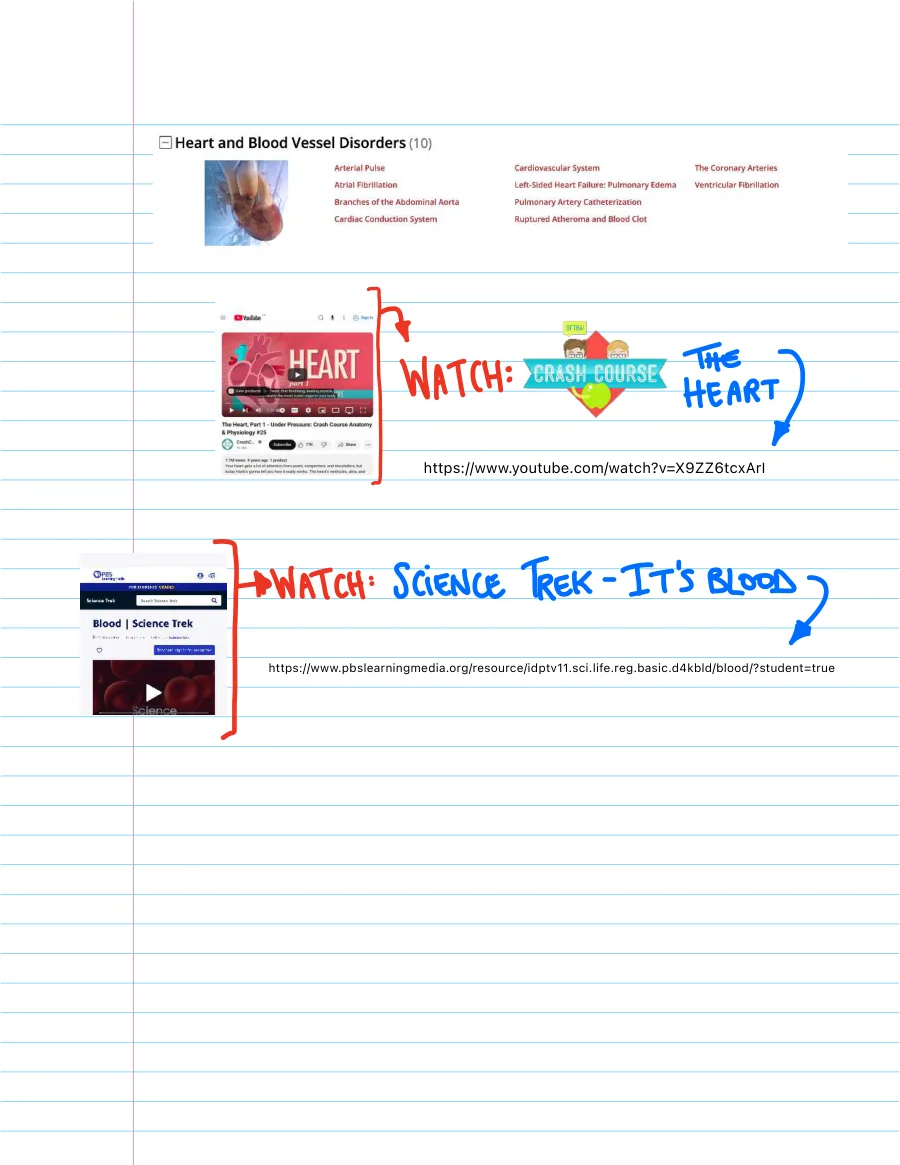
If the model cannot load on your device, use the illustrated class notes above and the pathway below to trace the same structures.
Follow blood through the heart, lungs and body.
Open on YouTube →No. Arteries are defined by direction away from the heart. The pulmonary artery carries oxygen-poor blood toward the lungs.
The pulmonary artery carries blood from the heart to the lungs. Is it an artery even though it carries oxygen-poor blood?
Yes. Arteries are defined by the direction blood travels: away from the heart.
Explain why capillaries connect the circulatory system with other body systems.
Their thin walls allow materials to move between blood and surrounding tissues, connecting circulation with cells throughout the body.