
Detect and respond
Receptors detect changes inside or outside the body. The nervous system processes information and coordinates responses through muscles or glands.
Explore how the body senses, processes and responds to information.
Receptors detect changes inside or outside the body. The nervous system processes information and coordinates responses through muscles or glands.
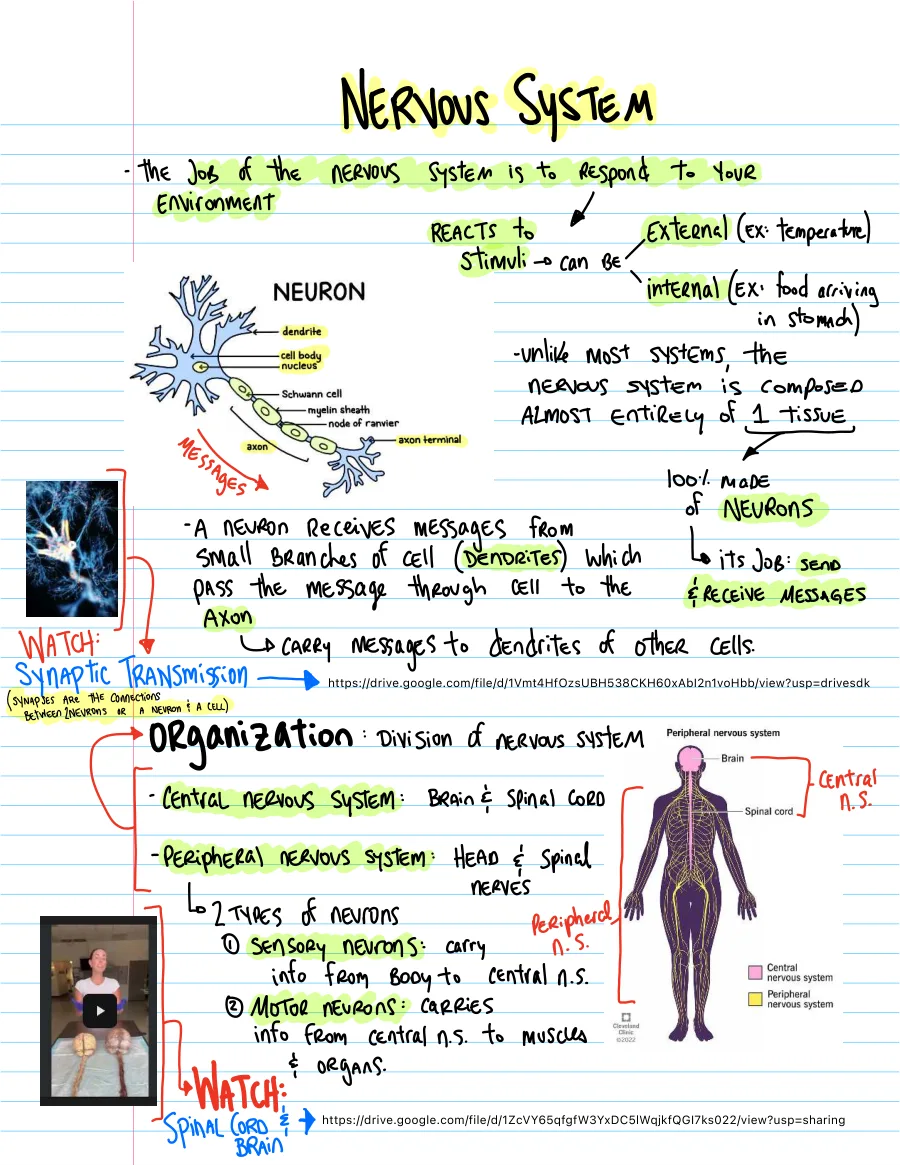
A neuron is a specialized cell. Dendrites receive signals; an axon carries signals away from the cell body toward other cells.
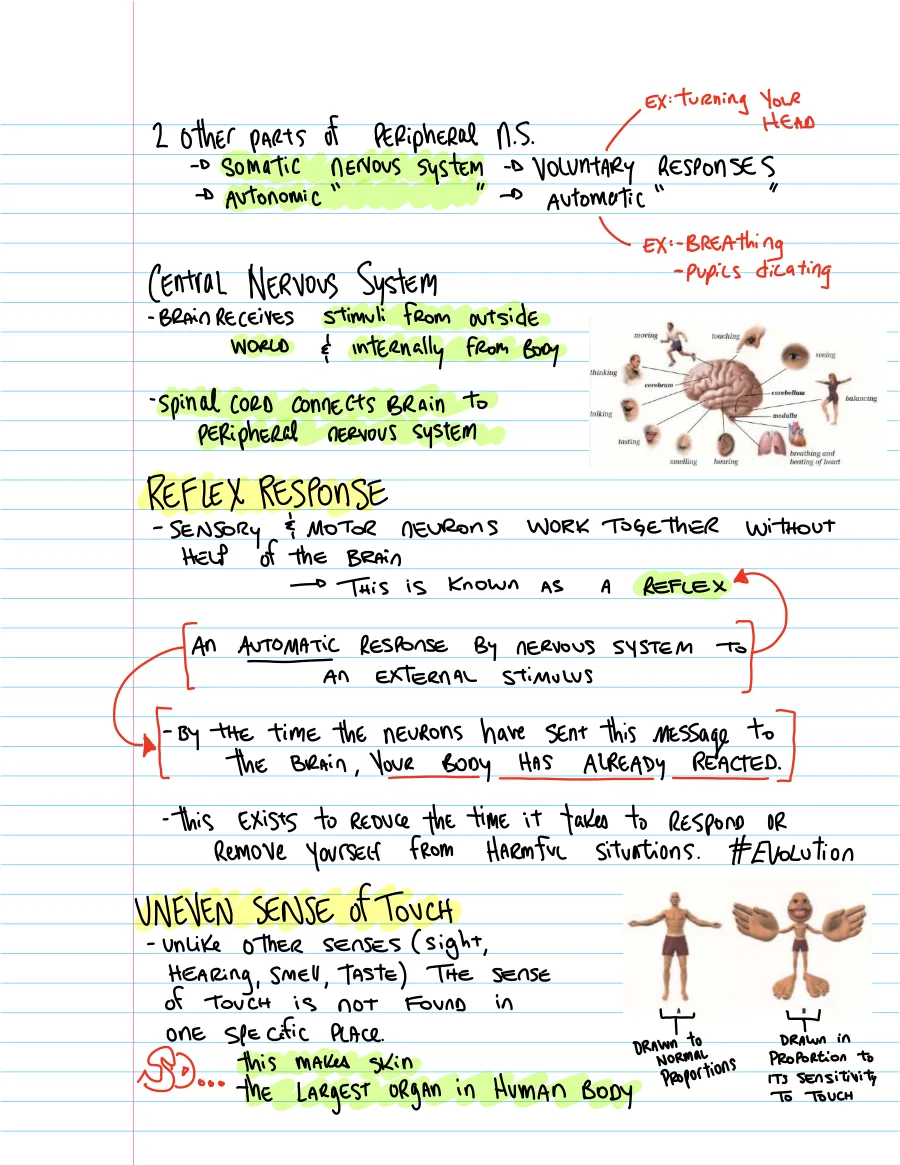
The central nervous system includes the brain and spinal cord. Peripheral nerves connect the central system with the rest of the body. Some responses are voluntary; others are automatic.
Stimulate the neuron and watch a signal pass through the model.
Use slow motion or pause to observe what changes as the signal passes. Then stimulate the neuron again.
Explain how a signal moving along a neuron helps the nervous system carry information. Ion channels and membrane voltage are extension material.
If the model cannot load on your device, use the illustrated class notes above and the pathway below to trace the same structures.
Explore how the body senses, processes and responds to information.
Open on YouTube →Receptors detect the stimulus; signals travel through nerves and the spinal cord; signals to muscles produce a response.
Trace a response when a bright light reaches your eye.
Receptors detect the light, signals travel to the central nervous system, and signals to muscles help adjust the pupil.
No. Reflex pathways can produce rapid responses without waiting for a conscious decision.
How does the nervous system connect a change in the environment to muscle movement?
Receptors detect a stimulus; signals travel to the central nervous system, which sends signals through nerves to muscles.